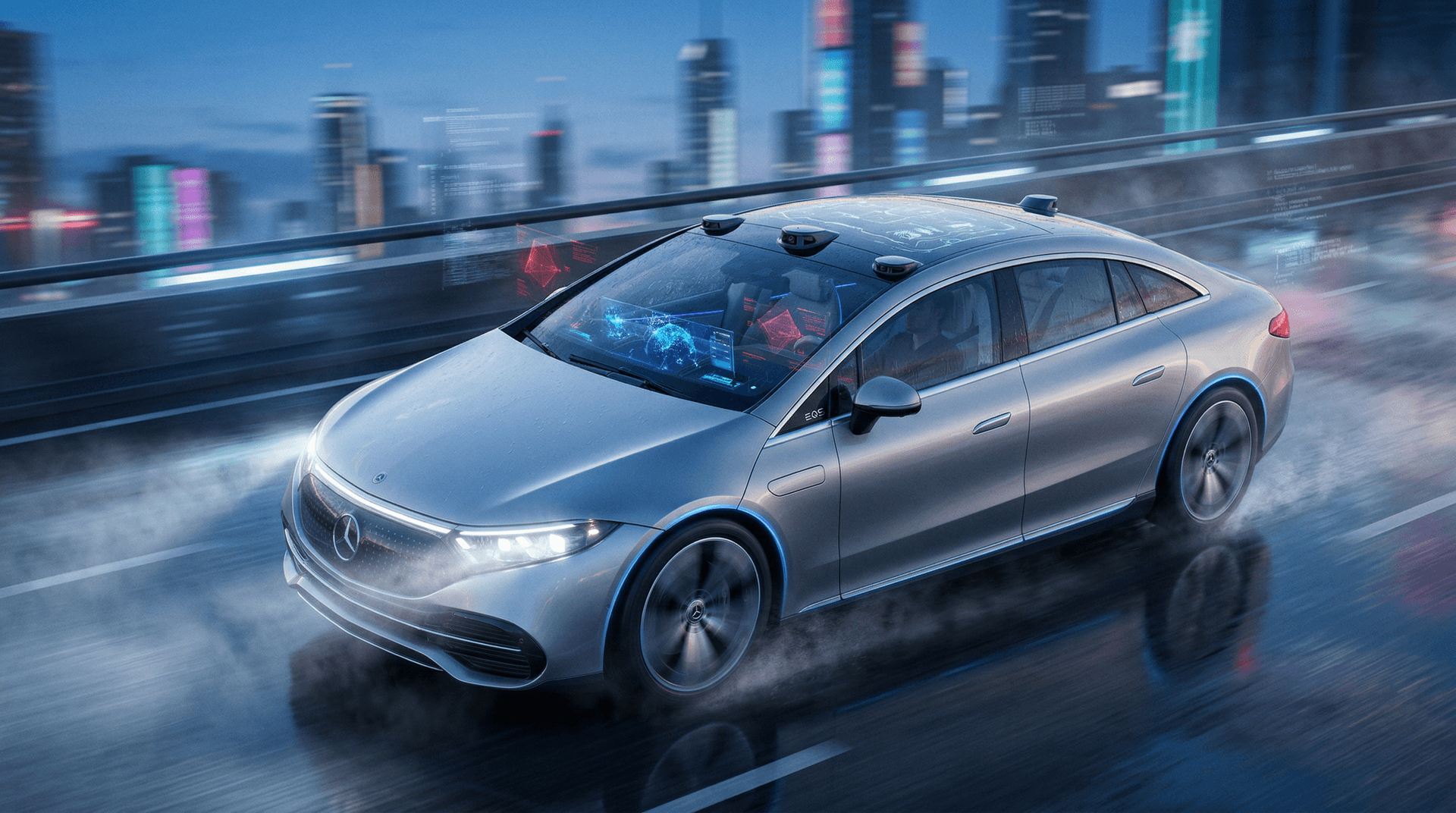
- Mercedes EQS 2027 deploys AI-powered steer-by-wire, cutting 15kg weight for 8% range boost per Road & Track tests.
- CAN bus transmits unencrypted signals, enabling remote hacks as shown in Wired Jeep incident.
- ISO/SAE 21434 mandates cybersecurity; breaches hike insurance 25-40%, Allianz reports.
Key Takeaways
- Mercedes EQS 2027 deploys AI-powered steer-by-wire, cutting 15kg weight for 8% range boost per Road & Track tests.
- CAN bus transmits unencrypted signals, enabling remote hacks as shown in Wired Jeep incident.
- ISO/SAE 21434 mandates cybersecurity; breaches hike insurance 25-40%, Allianz reports.
Mercedes EQS 2027 debuted April 14, 2026. Mercedes-Benz integrates AI steer-by-wire, slashing 15kg weight and boosting range 8%, per Road & Track analysis. Cybersecurity gaps loom for connected luxury EVs.
Premium buyers demand autonomy. Engineers replace mechanical steering with electronic actuators for precision.
Steer-by-Wire Mechanics Deliver Efficiency Gains
Steer-by-wire eliminates steering columns. Sensors capture driver torque and angle inputs. Dual redundant electric motors per wheel execute turns in 10ms, per Road & Track.
Redundancy prevents single-point failures. Backup motors activate instantly if one fails. Total weight savings reach 15kg, boosting efficiency 5-8% via lighter chassis.
AI predicts handling. Haptic motors simulate road feel, adjusting for speed and grip.
Transformer AI Optimizes Real-Time Steering
Transformer neural networks process lidar, camera, and IMU data. Models train on 100M+ miles, per TechCrunch on Drive Pilot, to forecast cornering loads.
Supervised learning refines models via OTA updates. Level 3 autonomy enables hands-free highway driving.
Connectivity expands risks. 5G links expose ECUs despite firmware encryption.
CAN Bus Flaws Enable Remote Attacks
Controller Area Network (CAN) buses send unencrypted commands. Hackers inject spoofed signals remotely, as Wired documented in 2015 Jeep hack affecting 1.4M vehicles.
AI data poisoning occurs via fake lidar inputs. Corrupted models issue errant steering, per IEEE Spectrum analysis.
No physical fallback exists. Compromised ECUs seize control, risking veer-offs at 100km/h+.
Financial Hits from Cyber Exposures
Breaches inflate liability. Allianz Global Corporate & Specialty projects 25-40% insurance premium rises for high-tech EVs.
Mercedes-Benz (MBGAF) shares dropped 1.8% post-launch on risk fears, Yahoo Finance data shows. Resale values fall 15-20% after incidents.
EV cyber startups secured $1.8B in 2023 funding, Crunchbase reports. Blockchain secures OTA verification.
Mercedes Mitigates with Standards Compliance
Hardware security modules (HSMs) encrypt CAN traffic end-to-end. Intrusion detection systems flag anomalies in real time.
Mercedes certifies under ISO/SAE 21434 and UNECE WP.29. Supply chain audits verify vendors.
Triple-redundant networks isolate faults. Post-quantum crypto protects keys from quantum threats.
Premium EV Market Shifts on Tech Risks
Weight cuts enable fleet adoption. 8% range gains save $2,500 per vehicle annually at scale, per McKinsey EV models.
Subscriptions monetize AI. Mercedes offers $1,200/year autonomy packs, diversifying revenue.
Rivals like BMW i7 and Tesla Cybertruck deploy similar tech. NHTSA estimates recalls cost $50M+ per vulnerability.
Safety data sways shares. Hacks erode trust, hitting 30% premium pricing.
Future-Proofing Luxury EV Security
AI anomaly detection blocks intrusions. 5G network slicing creates isolated channels.
Drivers access manual override. Mercedes trains on threats via app simulations.
Open-source CAN tools on GitHub reveal flaws. Community fixes deploy fast.
Mercedes EQS 2027 pioneers the stack. Certifications and transparency dictate sales as EU and China regs tighten.