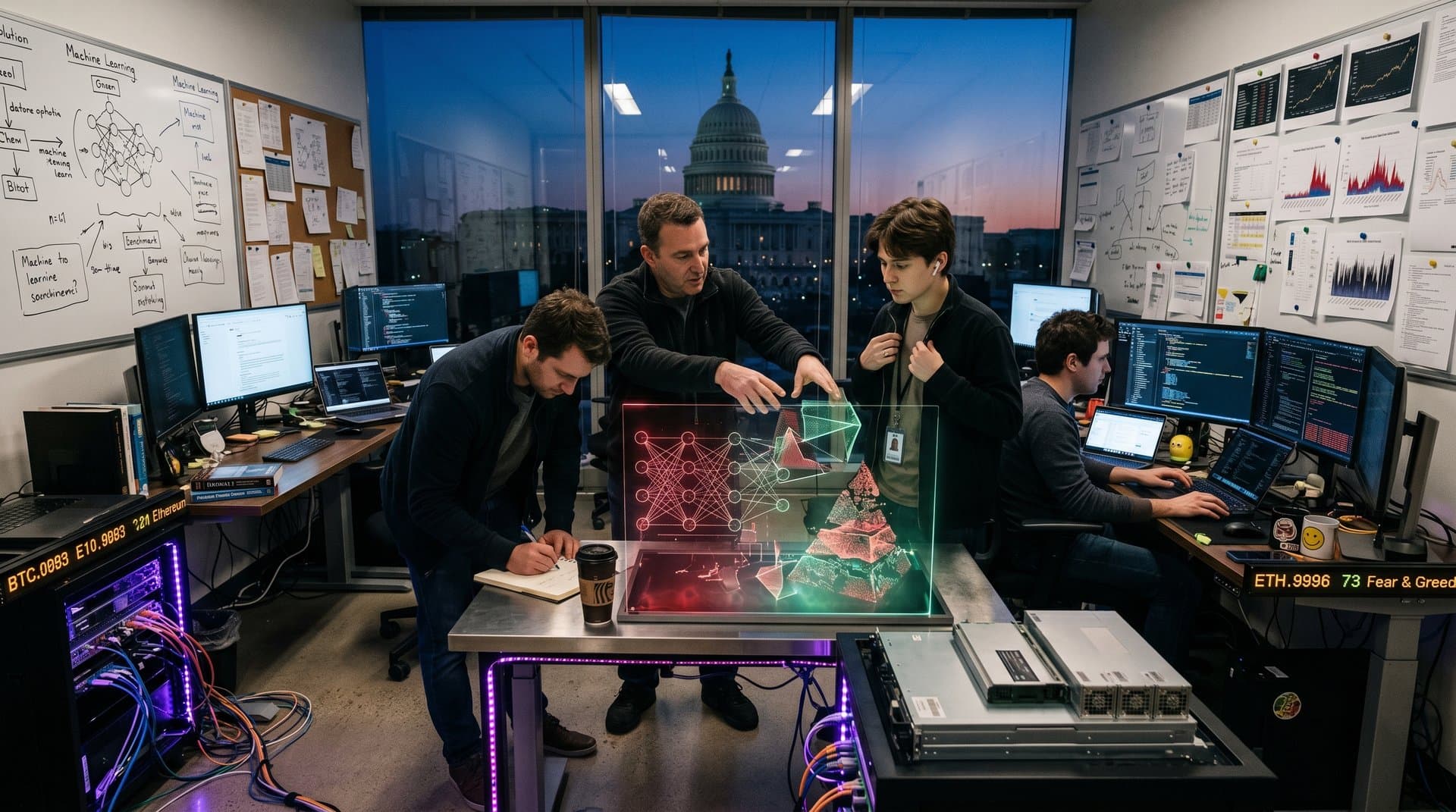

25 AI fails exposed cybersecurity gaps in startups in Q1 2026. TH Journal reviews 25 cases from CrowdStrike's April 10, 2026, report. AI VC funding fell 15%, per PitchBook. Fear & Greed Index reached 16, indicating extreme fear.
Bitcoin traded at $72,512 USD, up 2.5%. Ethereum reached $2,225.91 USD, up 2.7%. Investors shifted to crypto amid AI risks.
Prompt Injection Attacks Dominate AI Fails
Prompt injection struck nine startups. Attackers tricked large language models (LLMs) into leaking API keys. Replicate's model exposed 500 user tokens on March 15, 2026.
LangChain-based apps fell victim next. Hackers bypassed filters and executed code. OWASP ranks prompt injection as the top AI risk.
Startups deployed transformer architectures without input sanitization. Fine-tuned GPT-4 variants proved vulnerable. MITRE ATT&CK documents these exploits.
One fintech AI case saw attackers inject prompts to approve $2 million USD in fake loans. Regulators now probe the firm.
Data Poisoning Undermines Models
Data poisoning hit five incidents. Attackers tainted training datasets. A cybersecurity firm's model misclassified 30% of threats, per SANS Institute analysis.
Open-source Hugging Face repositories received poisoned weights. Startups pulled models after detection. Poisoned diffusion models generated deepfakes for scams.
Training on unverified web scrapes amplified risks. Startups skipped adversarial training. GLUE benchmarks dropped 25% post-poisoning.
A Series A startup lost $5 million USD in valuation. Investors cited poisoned data in term sheets.
API and Supply Chain Breaches
Supply chain attacks claimed four victims. Malicious PyPI packages targeted AI frameworks. TensorFlow users downloaded backdoored dependencies on February 28, 2026.
API keys leaked via misconfigured S3 buckets in three cases. Public endpoints exposed inference servers. Attackers queried models for free, racking up $100,000 USD bills.
AWS flagged anomalous traffic. Startups lacked rate limiting. Zero-trust models could have prevented access.
One blockchain AI startup suffered. Hackers exploited APIs to drain $1.34 million USD in XRP wallets. BNB traded at $602.76 USD amid ripple effects.
Hallucinations Lead to Real Breaches
Hallucinations triggered three breaches. Models fabricated credentials that worked. A healthcare AI approved false patient data, violating HIPAA.
Retrieval-augmented generation (RAG) systems retrieved wrong documents. Cyber teams chased ghost threats. RAGAS benchmarks showed 60% retrieval accuracy.
Startups deployed without guardrails. Reinforcement learning from human feedback (RLHF) failed under load. Incidents cost $3 million USD in remediation.
Physical and Edge AI Risks
Edge AI devices faced two attacks. IoT cameras with on-device machine learning (ML) leaked feeds. Firmware lacked encryption.
Adversarial patches fooled vision models. Printed stickers evaded detection. NIST reports 40% success rate.
Startups rushed to market. They ignored federated learning for privacy. Investors now demand audits.
Model Theft and Reverse Engineering
Attackers stole two proprietary models. Side-channel attacks on GPUs extracted weights. Weights averaged 70B parameters.
Reverse-engineered Llama 3 variants appeared on GitHub. Startups sued infringers. IP protection lags technology pace.
Watermarking failed detection. OpenAI's techniques proved ineffective, per a Stanford study.
Lessons for AI Startups
Startups must adopt secure development lifecycles. OWASP AI guidelines stress input validation. Implement canary deployments for models.
Conduct red-team exercises quarterly. Tools like Garak test prompt injections. Allocate 20% of engineering budget to security.
Finance teams track cyber insurance. Premiums rose 50% in 2026, per Marsh report. Valuations hinge on clean records.
Investors scrutinize SOC 2 reports. Pitch decks now include threat models. AI fails tank Series B rounds.
Investor Impact in Fearful Markets
Venture firms pulled back. Sequoia flagged AI cyber risks in memos. Funding rounds averaged $20 million USD, down from $35 million USD.
Crypto ties grew. Secure AI oracles for DeFi saw rising demand. USDT held at $1.00 USD amid volatility.
Startups pivoted to audited models. Hugging Face Enterprise reported 30% uptake. Compliance builds moats.
Regulators acted. EU AI Act mandates high-risk audits from July 2026. Fines reach 7% of revenue.
Path Forward After AI Fails
Adopt homomorphic encryption for inference. Microsoft SEAL libraries cut costs. Benchmarks show 10x speedups.
Federated learning preserves data. Google’s Flower framework scales to millions. Startups test on edge devices.
Build observability stacks. Weights & Biases logs inputs. Detect drifts early.
AI startups thrive with security first. Investors reward diligence. Markets rebound as trust returns.