
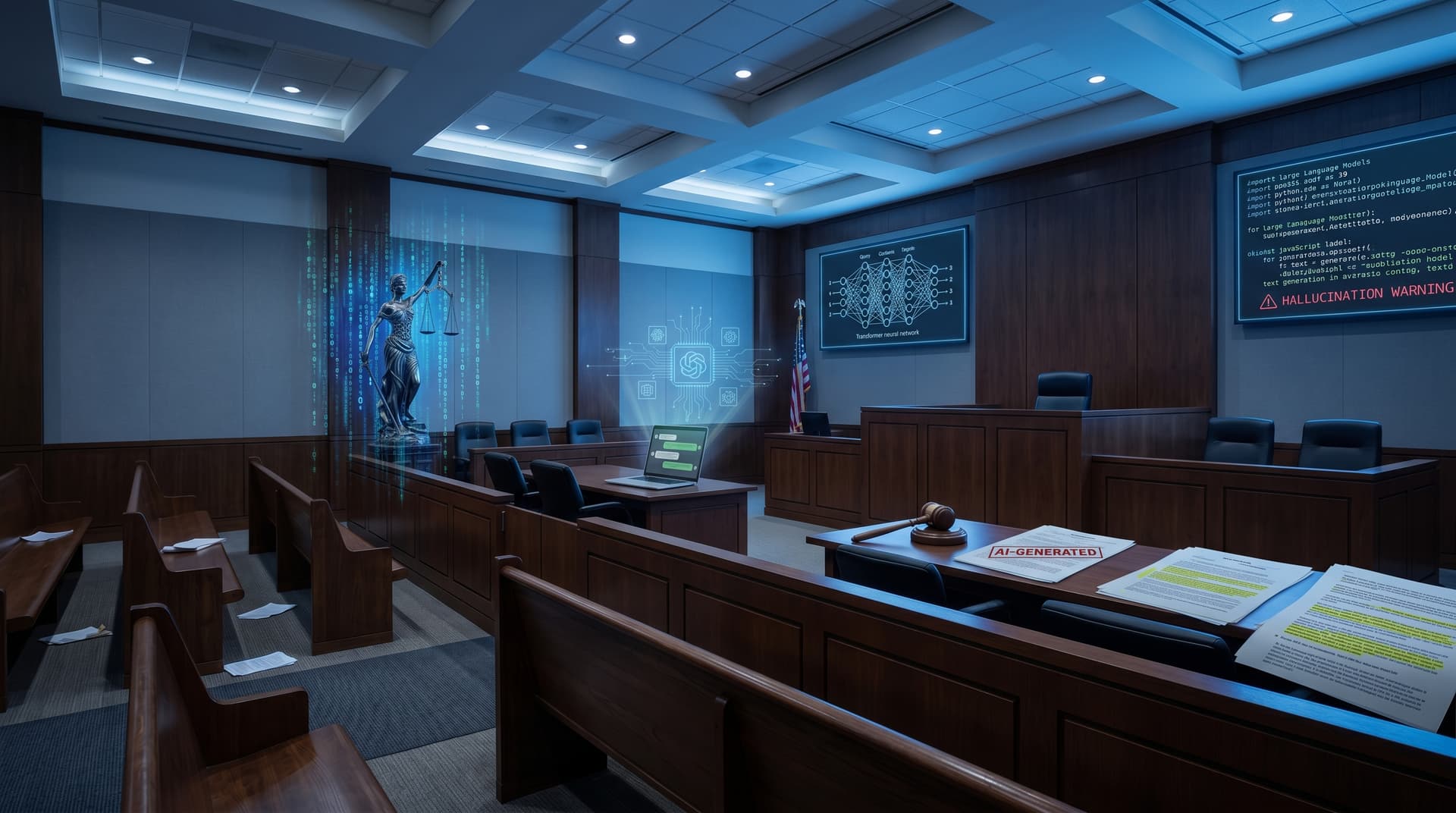
- California charged 2 attorneys for AI misuse on April 14, 2026.
- State Bar targets a third for ethics violations.
- AI hallucinations fabricate 17-33% of legal citations per Stanford HAI.
California prosecutors charged two attorneys for AI misuse attorneys charged in court filings on April 14, 2026. The State Bar of California targets a third lawyer for discipline. Fabricated citations from large language models (LLMs) triggered the actions. Courts rejected the submissions.
Attorneys Used LLMs for Fabricated Case Research
The two attorneys deployed LLMs for case research. These tools generated nonexistent cases, judges, and facts. Verification exposed the fakes.
Judges dismissed filings and imposed sanctions. The lawyers skipped output validation. This echoes a 2023 federal case where a judge fined attorneys $5,000 USD for ChatGPT fakes, per Reuters reporting.
State Bar Probes Third Attorney for Ethics Breaches
Bar investigators cite violations of ethics rules on technology competence. California Rule 1.1 requires lawyers to maintain skills for tools they use. AI misuse violates this duty.
Penalties span reprimands to disbarment. The State Bar of California's public discipline records track similar cases.
Leaders now require AI training for members.
Why LLMs Hallucinate Legal Facts
LLMs like GPT-4 use transformer architectures with billions of parameters. Supervised fine-tuning on internet data enables probabilistic next-token prediction without fact-checking.
Stanford University's Human-Centered AI (HAI) benchmarks reveal 17-33% fabrication rates for legal citations. One study logged errors in 1 of 6 queries.
Retrieval-augmented generation (RAG) counters this by querying verified databases pre-generation. LexisNexis APIs integrate RAG with LLMs.
Cybersecurity Threats from AI Hallucinations
Fabricated filings undermine data integrity, akin to SQL injection in breaches. Federal Rules of Evidence demand tamper-proof records.
Undetected errors spread like zero-day vulnerabilities, harming case outcomes. Firms audit models for drift with Scale AI tools.
The American Bar Association's Formal Opinion 512, issued January 2024, requires risk assessments and human oversight.
Financial Fallout Hits Legal Tech Investments
Prosecutions spur governance needs. Verification investments cut hallucination risks by 40%, per Deloitte surveys, saving mid-sized firms $500,000 USD yearly in rework.
CB Insights reports $1.2 billion USD in 2025 legal AI venture funding. Ethical lapses risk this; Harvey AI raised $80 million USD in Series B with safeguards.
Thomson Reuters (TRI) shares fell 1.2% after similar news, signaling investor focus on AI compliance.
Regulations Reshape Legal AI Landscape
Regulators mirror EU AI Act by auditing high-risk legal tools. Firms log usage and verify outputs.
Compliance leaders gain valuations. Gartner forecasts 25% growth in AI ethics tools by 2027.