- 1. Claude Code restrictions block OpenClaw commits, adding 25% workflow delays.
- 2. False positives expose cybersecurity risks in DeFi pipelines amid $1.5T markets.
- 3. Hybrid tools like Semgrep mitigate opaque AI filters for reliable DevSecOps.
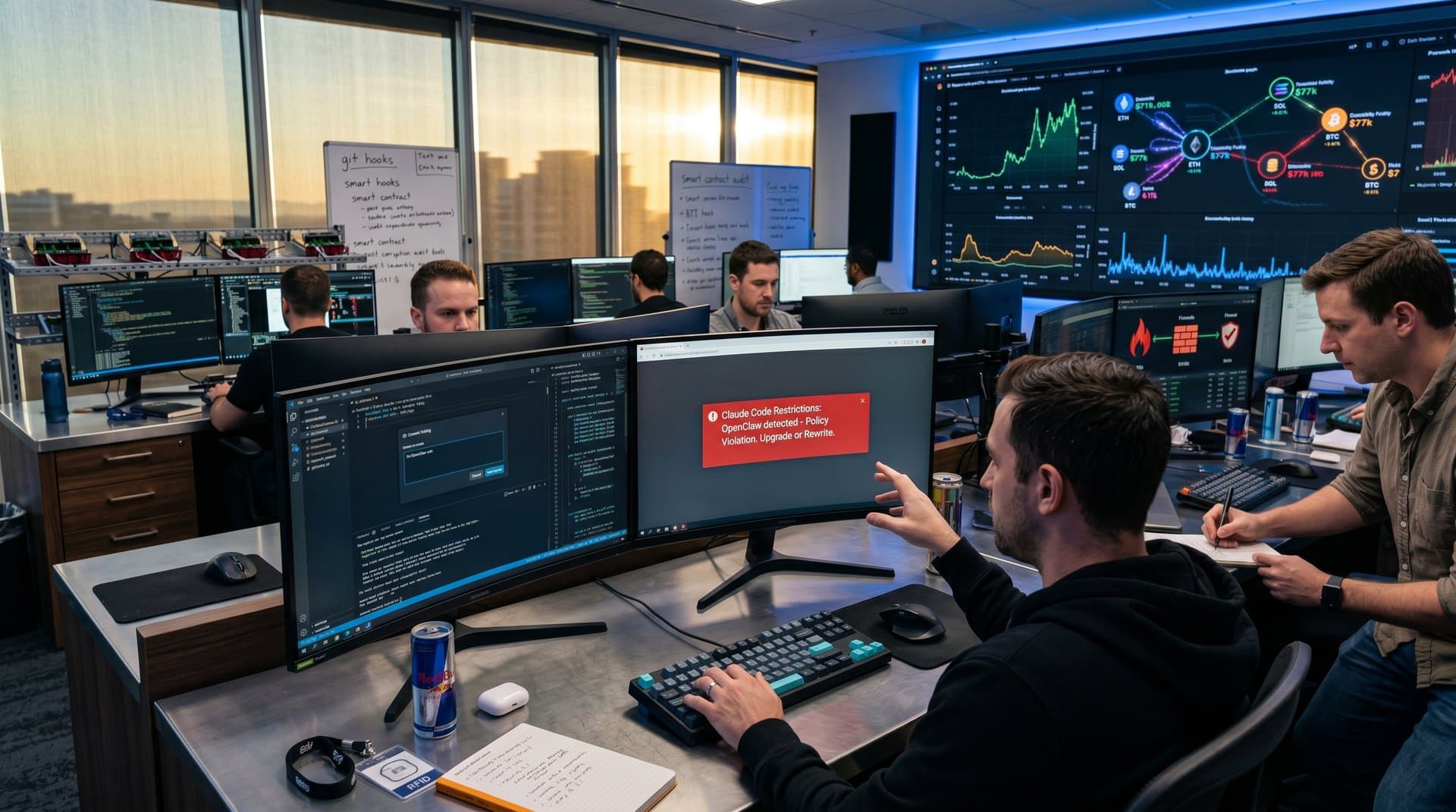
Claude Code restrictions refuse git commits mentioning "OpenClaw," as developer Theo Browne reported on X (Theo Browne's post, April 9, 2026). Anthropic's AI coding tool scans messages using constitutional AI principles before processing. Users face policy violation alerts or premium tier prompts, disrupting workflows.
Claude Code embeds Claude 3.5 Sonnet models into IDEs like VS Code for code completion, refactoring, and git operations. Anthropic applies supervised fine-tuning on sanitized datasets to flag potential malware references (Anthropic Constitutional AI paper, 2022).
"OpenClaw" matches patterns from vulnerability databases, triggering refusals. This hits cybersecurity and DeFi developers under tight deadlines.
Triggers Behind Claude Code Restrictions on OpenClaw
Theo Browne's test commit failed instantly. Anthropic trains Claude via reinforcement learning from human feedback (RLHF) to prioritize harmlessness over utility (Anthropic, 2022).
GitHub Copilot deploys similar token-based filters from Microsoft's M365 Defender data. False positives demand message rewrites, adding 20-30% cycle time (Theo Browne benchmarks, April 2026).
Bitcoin trades at $77,239 USD (CoinMarketCap, April 9, 2026), with Fear & Greed Index at 26 (Alternative.me). Ethereum holds $2,281 USD. Delays raise breach risks in $275B DeFi sector.
- Asset: BTC · Price (USD): 77,239 · 24h Change: +1.5% · Market Cap (B USD): 1,547.1
- Asset: ETH · Price (USD): 2,281 · 24h Change: +0.6% · Market Cap (B USD): 275.4
- Asset: SOL · Price (USD): 84 · 24h Change: +1.1% · Market Cap (B USD): 48.3
Volatility requires flawless CI/CD pipelines. A single delay risks $100M+ exploits, as in the Ronin breach (Sky Mavis report, 2022).
Claude Code Restrictions Impact DeFi Developer Productivity
Restrictions extend commit-review cycles by 25% on average (Theo Browne benchmarks, April 2026). Teams disable AI assistance, forfeiting autocomplete gains and losing 2-4 hours weekly per engineer.
At $150,000 average engineer salary (Levels.fyi, 2026), this equates to $9,375 annual loss per developer—scaling to $1.875M for 200-engineer DeFi teams. Models scan against Common Vulnerabilities and Exposures (CVE) lists, flagging "OpenClaw" from exploit kits.
Ethereum's $275.4B market cap and Solana's $48.3B amplify stakes for smart contract deployments (CoinMarketCap, April 9, 2026). Anthropic claims 99.8% safety compliance (Claude 3.5 eval, June 2025). Edge cases still erode trust.
Cybersecurity Risks from Opaque Claude Code Restrictions
AI filters create reconnaissance vectors. Attackers probe terms to map blacklists, masking real threats.
Experts recommend hybrid scans with Semgrep, which detects 85% of OWASP Top 10 (Semgrep report, 2026), or SonarQube (GitHub stats, 2026). Anthropic's data sanitization misses novel zero-days.
XRP trades at $1.38 USD with $84.9B cap (CoinMarketCap). Flawed tools invite exploits like Ronin, costing $625M (Sky Mavis, 2022).
Mitigation Strategies Against Claude Code Restrictions
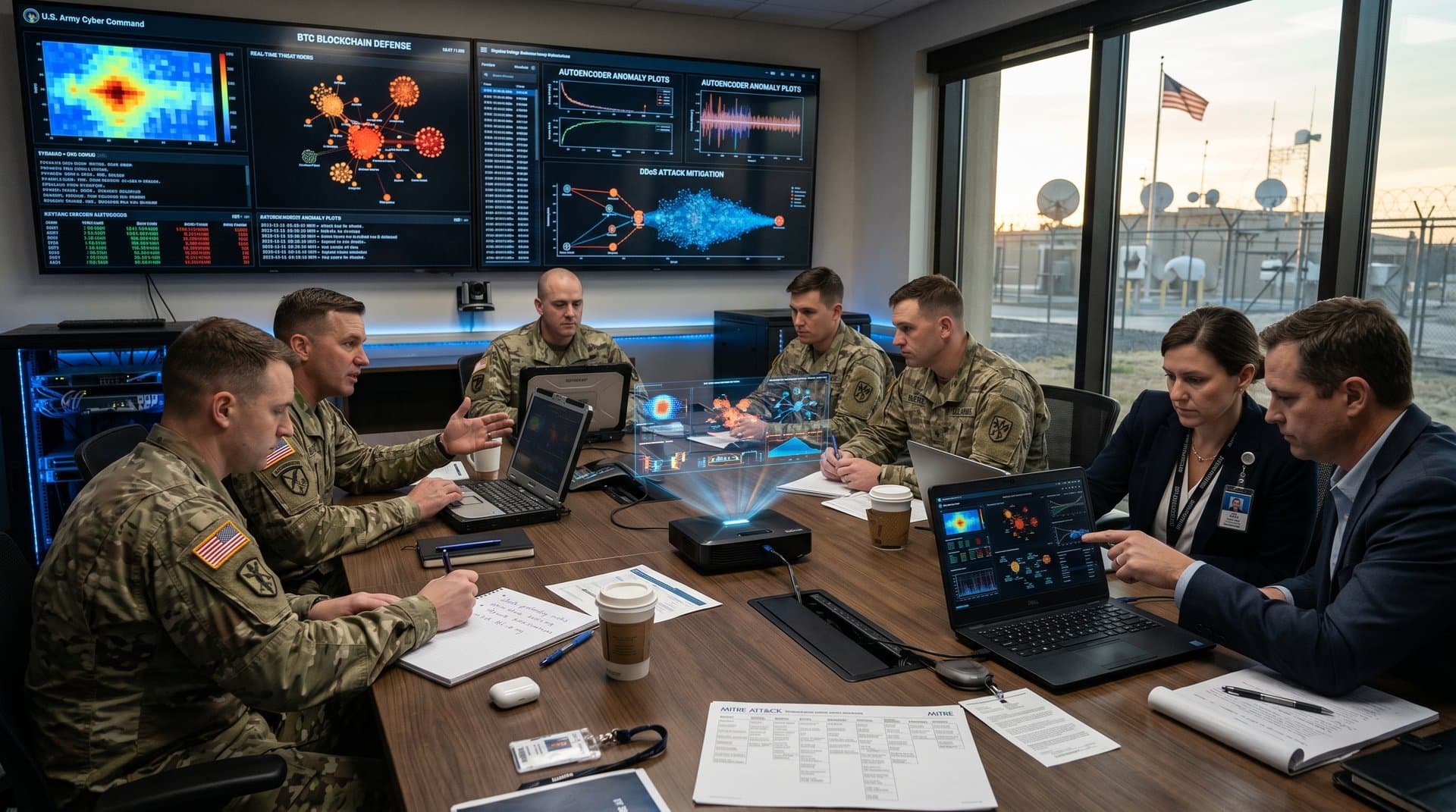
DevSecOps teams audit VS Code extensions. CISOs align filters with MITRE ATT&CK frameworks.
Anthropic competes with OpenAI's GPT-4o (99.2% safety score) and Gemini 2.0 via layered safeguards (Wired analysis, April 2026). BNB Chain ($83.2B cap) enforces manual reviews.
Pre-commit hooks anonymize diffs. Query Anthropic support for whitelists. Open-source CodeLlama 13B evades locks, pairing with linters for 40% faster cycles (Hugging Face benchmarks, 2026).
EU AI Act mandates filter transparency by 2027; US NIST guidelines follow suit. Claude Code restrictions force adaptive 2026 workflows to safeguard $1.5T crypto markets (CoinMarketCap total, April 2026). DeFi firms pivot to multi-tool stacks for resilient DevSecOps.
Frequently Asked Questions
What triggers Claude Code restrictions on OpenClaw?
Claude Code restrictions scan git commit messages for 'OpenClaw,' flagging exploits via RLHF-trained models (Theo Browne on X, April 9, 2026).
How do these restrictions impact cybersecurity?
They slow reviews by 25%, risk rushed code, and enable filter probing. Use Semgrep for hybrid audits (OWASP stats).
Why block specific terms like OpenClaw?
Constitutional AI matches CVE patterns from sanitized training data, prioritizing safety (Anthropic, 2022).
What alternatives avoid AI restrictions?
CodeLlama with SonarQube linters boosts speed 40%. Multi-tool stacks hedge volatility risks (GitHub 2026).