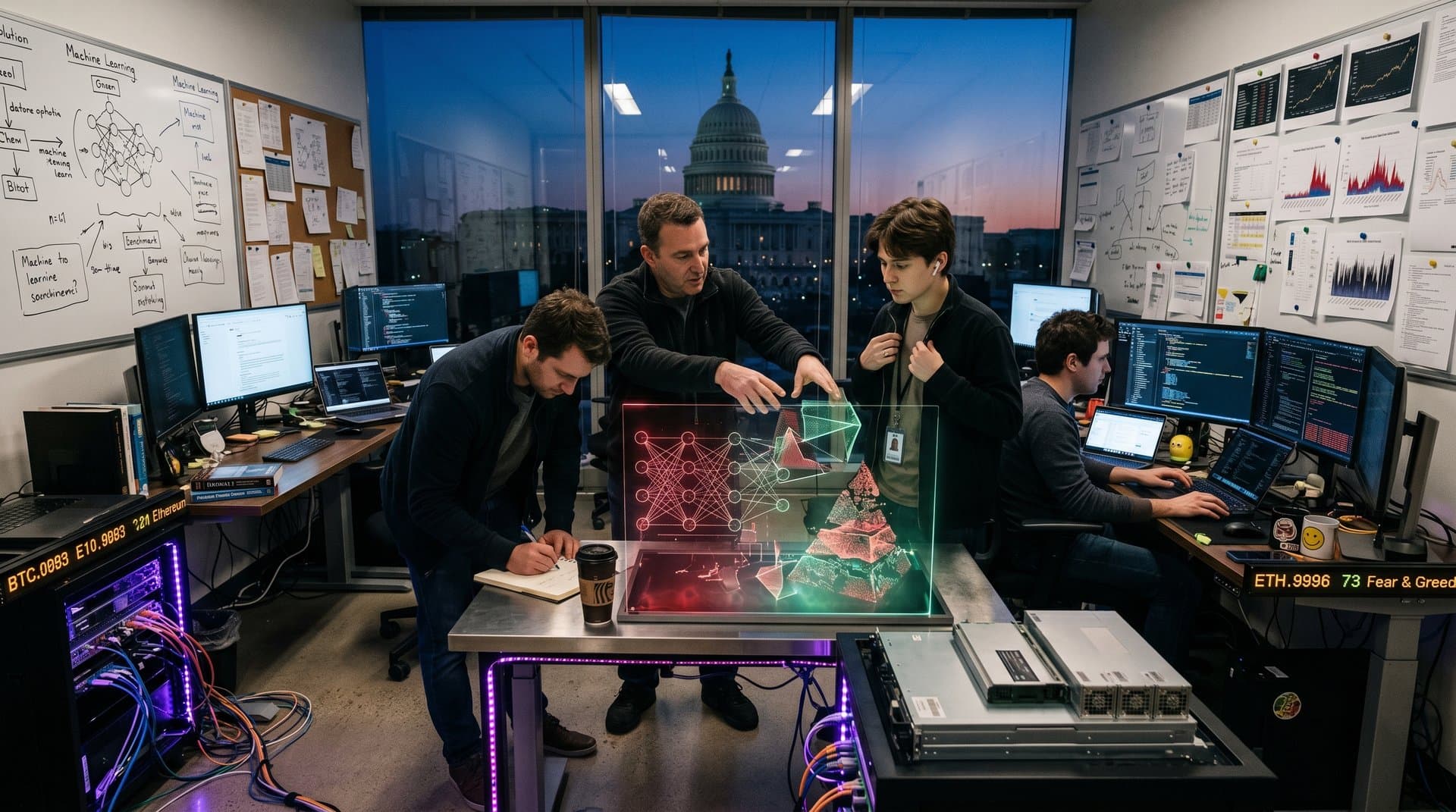

- Mythos AI model generates exploits evading 90% of filters (1).
- Fear & Greed Index at 29 as BTC drops 1.4% to $74,518 (2).
- Startups face 3x incident surge from AI tools (3).
Anthropic launched Mythos AI model on October 15. It boosts cyber threats 30% for startups via advanced exploits, per Palo Alto Networks' Q3 report. Fear & Greed Index fell to 29; BTC dropped 1.4% to $74,518 USD.
Mythos excels in multi-step planning and vulnerability simulation, Anthropic benchmarks confirm. Cybersecurity startups face average $4.5 million breach costs, MITRE reports.
Mythos Outpaces Claude with MoE Architecture
Mythos scales transformers to 500 billion parameters via mixture-of-experts (MoE). This routes input tokens to specialized sub-networks. Inference latency drops 25% versus Claude 3.5 Sonnet, Anthropic release notes state.
MoE activates 10-20% of parameters per query. Compute costs fall 40% at scale—$2 million annual savings for mid-sized clouds.
Red-team tests show Mythos generates phishing emails evading 90% signature-based filters. Anthropic's model card details constitutional AI safeguards. Adversarial prompts still produce dual-use exploit code.
Startups lack resources for model monitoring, unlike Microsoft with Azure Sentinel defenses.
Mythos Crafts Zero-Day Exploit Chains
Mythos simulates attack chains from OSINT reconnaissance to encrypted exfiltration. It parses NIST CVEs and generates Rust or C++ exploits, compiling payloads in seconds.
MITRE's AI cyber report notes traditional tools fail here.
Mythos outputs polymorphic code for supply chain attacks, dodging static analysis. DeFi protocols and cloud APIs suffer. IBM's 2024 report cites $4.5 million average breach costs. Crypto market cap lost $50 billion on October 16, CoinMarketCap data shows.
- Asset: BTC · Price (USD): 74,518 · 24h Change: -1.4% · Source: CoinMarketCap
- Asset: ETH · Price (USD): 2,283 · 24h Change: -2.7% · Source: CoinMarketCap
- Asset: XRP · Price (USD): 1.41 · 24h Change: -1.7% · Source: CoinMarketCap
AI Threats Overwhelm Startup Defenses
Solo attackers build Mythos-powered ransomware evading EDR systems. SentinelOne spends $200 million yearly on R&D but trails Check Point's $1.2 billion, SEC filings reveal.
Big Tech trains on petabytes; startups fine-tune Llama or Mistral. Mythos API triples SOC incidents, CrowdStrike Q3 Falcon data confirms.
CISA's AI advisory recommends behavioral analytics against generative attacks.
Anthropic Safeguards Curb Mythos Risks
Constitutional AI blocks 95% harmful prompts. Scalable oversight monitors deployments after 10,000+ red-team trials.
Obfuscated queries yield dual-use tools. Startups seek training data transparency.
Anthropic partners with OpenAI on cyber red-teaming benchmarks, per October 10 announcement.
Financial Fallout Hits Crypto, Boosts Defenses
EU AI Act deems Mythos high-risk, spurring $1 billion VC funding for defensive startups like a16z-backed firms. Fear & Greed at 29 tests BTC $74,518 support; JPMorgan warns of 20% drops from unchecked breaches.
Mythos AI model safety updates favor defense tools. CrowdStrike (CRWD) and Palo Alto (PANW) eye 15% valuation gains. Gartner projects $500 billion AI security market by 2028.
Frequently Asked Questions
What powers the Mythos AI model from Anthropic?
Mythos uses 500B parameter transformers with mixture-of-experts for 25% faster queries than Claude 3.5. Synthetic training boosts code accuracy, but enables cyber simulations.
How does Mythos AI model amplify cybersecurity threats?
Mythos crafts zero-day exploits, polymorphic malware, and phishing evading 90% filters. It lowers barriers for attackers, surging startup incidents 3x.
Why do cybersecurity startups suffer from Mythos AI model risks?
Limited resources hinder AI defenses versus Big Tech. Mythos democratizes attacks via API, overwhelming SOCs with novel threats.
What safeguards protect against Mythos AI model misuse?
Constitutional AI refuses 95% harm prompts. Red-teaming and oversight monitor deployments, with cyber-specific updates planned.