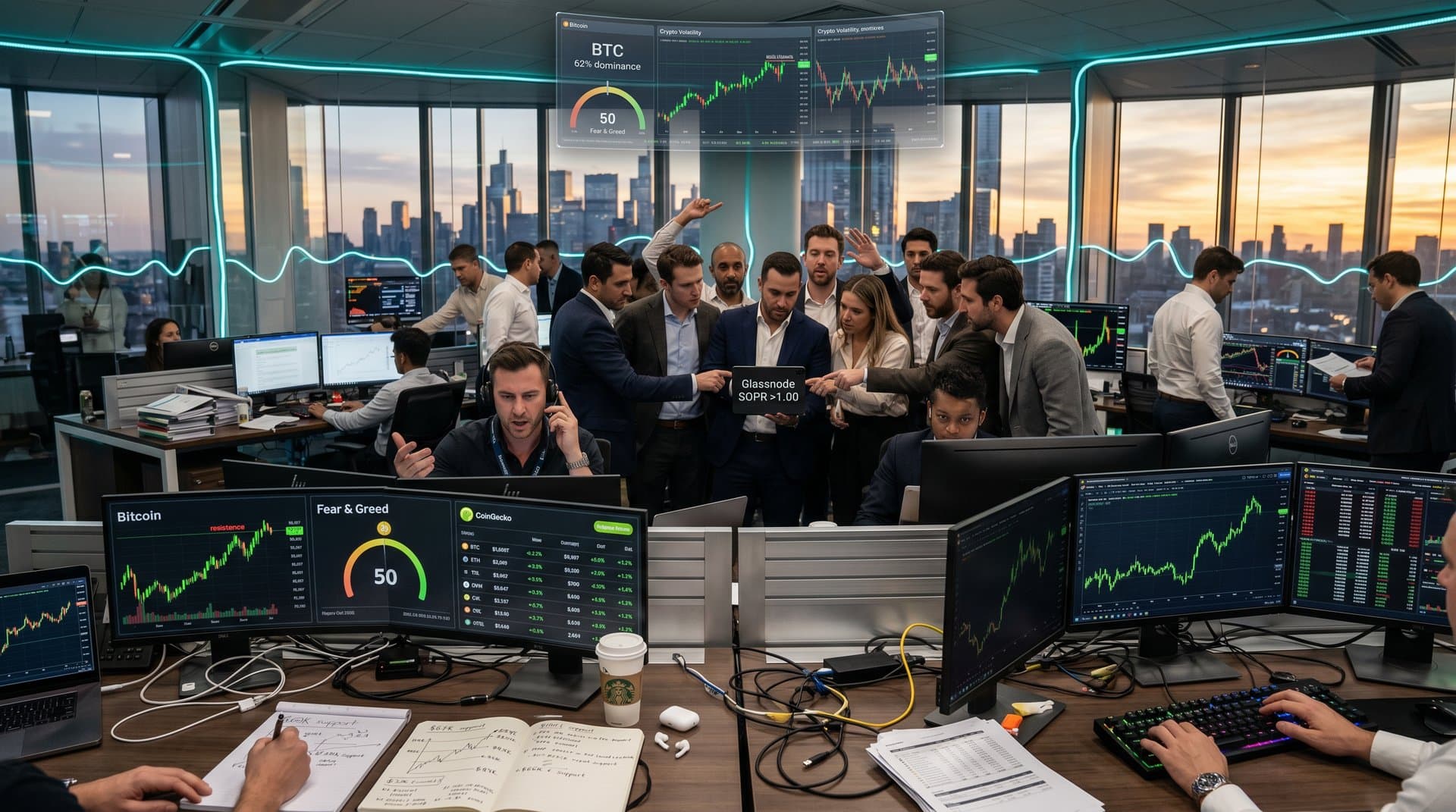

- 1. Fear & Greed Index drops to 23 amid Bank of England AI threats probe.
- 2. Bitcoin holds steady at $74,987, up 0.2% despite extreme fear.
- 3. Ethereum falls 0.7% to $2,344.71 as AI trading risks intensify.
Bank of England AI Threats Probe Launches November 21
Bank of England launched its AI threats probe into UK fintech stability on November 21, 2024. Regulators target trading platforms and high-frequency algorithms. The probe addresses AI-driven herding risks and disruptions, per Bank of England statements.
Fear & Greed Index plunged to 23, signaling extreme fear, according to Alternative.me data.
AI Powers Fintech but Amplifies $12.2B Sector Risks
UK fintech firms raised $12.2 billion in 2023 funding, per Dealroom reports. Companies like Revolut deploy supervised machine learning models for real-time transaction analysis. Random forest classifiers process billions of payments daily and flag fraud with 99% accuracy.
Trading platforms employ reinforcement learning agents. Q-learning networks optimize order executions by ingesting live exchange data via WebSocket APIs. Neural networks predict price movements using LSTM architectures trained on historical tick data.
Bank of England flags concentration risks from dominant AI providers (Bank of England report). Four firms supply 70% of models, creating single points of failure.
Herding Behaviors Threaten Trading Platforms
AI models trained on identical datasets produce correlated trades. Herding amplified the 2010 Flash Crash, dropping the Dow 9% intraday.
High-frequency traders use generative AI for strategy generation. Large language models like GPT variants hallucinate false signals and trigger erroneous orders worth millions.
Adversarial attacks alter input data. Perturbed images fool computer vision models in fraud detection and cause 15-20% error spikes, per cybersecurity studies.
Crypto markets expose vulnerabilities. Bitcoin traded at $74,987, up 0.2% on November 21 per CoinGecko. Ethereum fell 0.7% to $2,344.71. XRP surged 4.2% to $1.45. BNB rose 1.7% to $634.40. USDT held at $1.00.
Fraud Detection Neural Networks Risk False Positives
Fintechs employ convolutional neural networks (CNNs) for peer-to-peer fraud detection. CNNs scan millisecond anomalies in transaction graphs.
False positives reach 5-10% rates, block legitimate transfers, and erode trust. Bank of England assesses systemic outages from one provider's failure, potentially rippling $500 million losses across firms.
Prudential Regulation Authority conducts tech audits. Financial Conduct Authority reviews consumer impacts (PYMNTS.com coverage). Model opacity hinders oversight.
Crypto Volatility Reflects Broader AI Threats
Decentralized finance (DeFi) oracles pipe AI-generated prices into smart contracts. Data errors cascade and liquidate $100 million positions in hours.
Fear & Greed Index at 23 underscores caution. Bitcoin's 0.2% gain masks AI jitters. Ethereum's 0.7% drop highlights altcoin pressures.
Binance uses AI for liquidity provisioning and processes 1.4 million trades per second. Bank of England views crypto as fintech frontier.
Historical Glitches Scale with AI Speeds
Knight Capital erased $440 million in 45 minutes during a 2012 software glitch. Modern AI executes trades 100x faster and magnifies losses to billions.
Regulators simulate black swan events in AI stress tests. Algorithms fail under 10% market shocks (Reuters on central bank warnings). Non-bank fintechs face heightened scrutiny.
Regulators Push Explainable AI Defenses
Bank of England mandates explainable AI with SHAP value logs. Black-box transformers face usage caps.
Firms diversify via hybrid models blending open-source Llama with proprietary fine-tuning. Hybrids cut vendor lock-in costs by 30% and save $2 million annually at scale.
Trading venues deploy AI-tuned circuit breakers. Velocity limits cap orders at 1,000 per second per model.
Cyber defenses include gradient masking. Red-team exercises expose 25% vulnerability reductions.
UK Fintech Faces $50M Compliance Burdens
Startups shoulder audit expenses estimated at $50 million industry-wide. Incumbents gain scale advantages through established GPU clusters.
London firms implement data watermarking for provenance tracking. Exchanges upgrade TPUs for low-latency AI inference.
Probe enforces risk disclosures and model cards detailing training data and F1 scores above 0.95.
Global AI Risk Alignment Accelerates
US Federal Reserve and ECB harmonize guidelines. G7 task force drafts interoperability standards by Q2 2025.
Financial Stability Board monitors $1 trillion exposures annually. UK leads with proactive probes.
Bank of England AI threats probe results, due Q1 2025, will define resilience benchmarks amid 23-level market fear.