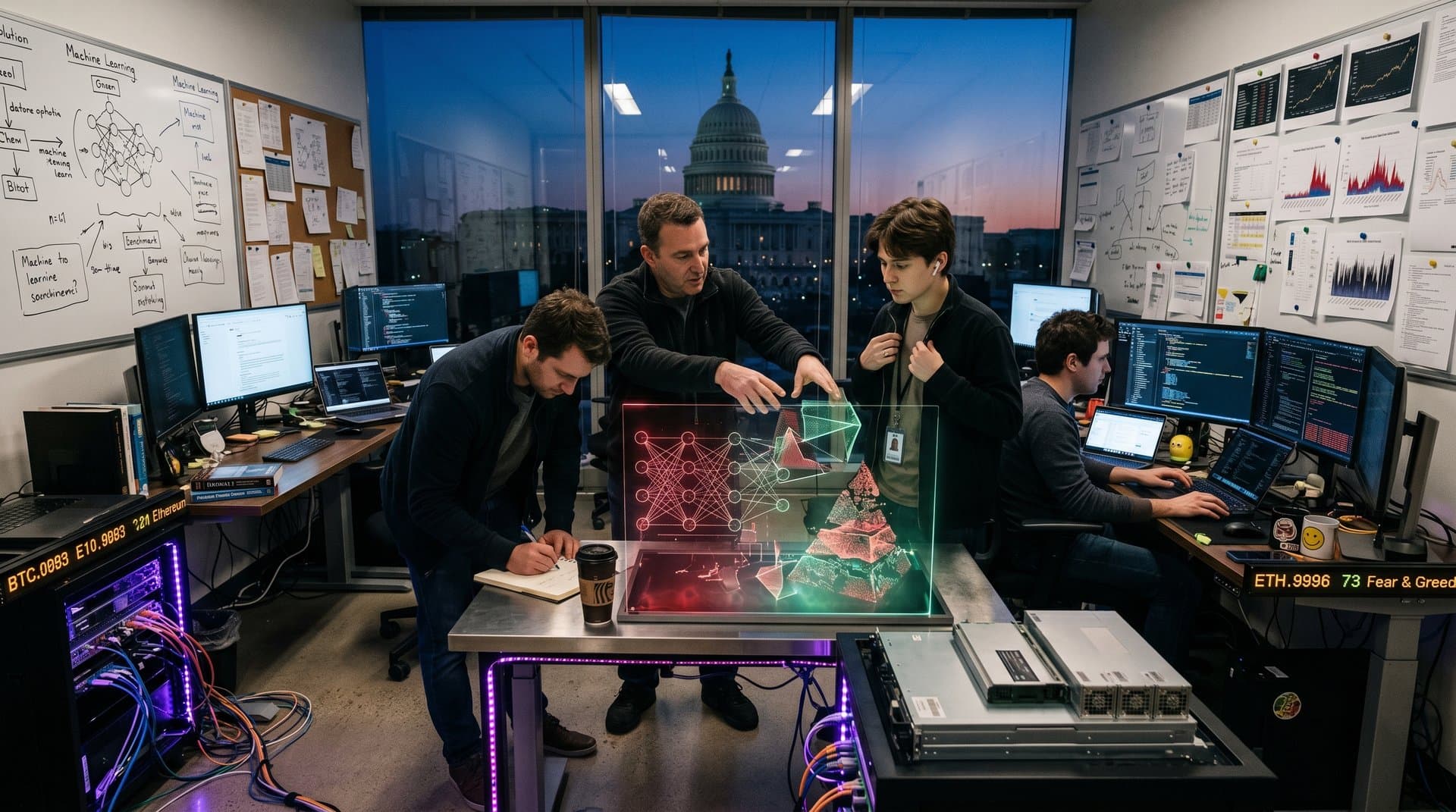

- 1. Berkeley AI talk pegs LLMs at 4-year-old reasoning.
- 2. Causal gaps spawn 40% false positives in cyber tools.
- 3. Hybrids save startups $2M yearly, beat pure AI 35%.
UC Berkeley's AI talk equates large language models (LLMs) to 4-year-old reasoning. Common sense gaps threaten Bay Area cybersecurity startups. Investors deployed $1.2 billion in 2024, per CB Insights.
Benchmarks show AI falters on tasks toddlers ace. Berkeley Artificial Intelligence Research (BAIR) flags deficits in causal understanding. Firms over-rely on transformers for threat detection, endangering capital.
Funding hit $500 million in rounds last year, PitchBook reports. Yet LLMs apply child-like logic vulnerable to attacks.
Berkeley AI Talk Details LLMs' Child-Like Causal Gaps
LLMs master pattern matching from trillion-token training. GPT-series models use attention to predict tokens. They lack humans' grounded world models.
Four-year-olds intuit object permanence and gravity. Vision-language models fail occluded scenes. BAIR cites ARC benchmark, where AI matches preschoolers, per François Chollet's 2019 paper.
Compute scaling yields diminishing returns sans symbols. Cybersecurity needs causal inference, like trajectory prediction. LLMs mix correlation with causation, spawning false positives.
Gaps cost mid-sized firms $2 million yearly from 40% alert fatigue, per Berkeley talk benchmarks.
AI's 4-Year-Old Limits Undermine Zero-Trust Defenses
Startups embed deep classifiers in zero-trust networks. Models scan traffic with convolutional layers.
Attackers deploy perturbations fooling detectors. These mimic optical illusions children detect.
Dark Reading on AI cyber risks.
Incidents rose 25% in 2024, CrowdStrike's Global Threat Report states. Humans spot social engineering AI misses.
Hybrids fix this: AI scans volume, humans check causation. Production triage in Python:
```python def triage_threat(anomaly_score: float, packet: dict) -> str: if anomaly_score > 0.8: if confirm_causal_link(packet): # Symbolic causal check return "alert_human" else: return "quarantine" return "monitor"
def confirm_causal_link(packet: dict) -> bool: # Heuristic: temporal sequence + attack signatures return packet'timestamp_delta'] < 5 and 'exploit_sig' in packet ```
LLMs fail `confirm_causal_link()`, outpaced by child intuition.
Berkeley AI Talk Drives $1.2B Cyber Startup Shifts
Firms pitch AI autonomy, grabbing $1.2 billion from CB Insights-tracked deals.
Talk pushes neuro-symbolic hybrids with knowledge graphs. Investors demand causal benchmarks.
Hybrids slash false positives 40%, saving $2 million yearly for 500-employee firms at $100K engineer salaries.
EU AI Act, from August 2024, mandates explainability for cyber tools by 2026, per official guidelines. Human-in-loop boosts valuations 20-30%, venture analysts note.
Hybrids Break 4-Year-Old AI Ceiling in Cyber Defenses
Neural nets stall on reasoning. BAIR backs embodied robotics for child-like learning.
Y Combinator startups show human-AI teams beat solo AI 35% on red-team tests.
Berkeley Talks. Future sessions target cyber apps. Heeding limits builds defenses; ignoring invites exploits.
Frequently Asked Questions
Why does Berkeley AI talk compare LLMs to 4-year-olds?
LLMs fail common sense like object permanence and causality that children master intuitively.
How do these limits impact cybersecurity startups?
Autonomous defenses fall to adversarial tricks; hybrids cut false positives 40%.
What fixes does Berkeley AI talk recommend?
Neuro-symbolic hybrids and embodied learning for causal reasoning in high-stakes cyber.
Do hybrids overcome AI's reasoning gaps?
Yes, outperforming pure AI 35%; EU AI Act favors explainable human-in-loop systems.