
By [Your Name], Senior Tech Journalist at TH Journal August 1, 2024
In a pivotal moment for the technology sector, the European Union's Artificial Intelligence Act (EU AI Act) officially enters into force today, August 1, 2024. Published in the Official Journal of the European Union on July 12, this comprehensive regulation marks the first horizontal legal framework on AI worldwide, aiming to foster trustworthy AI while safeguarding fundamental rights.
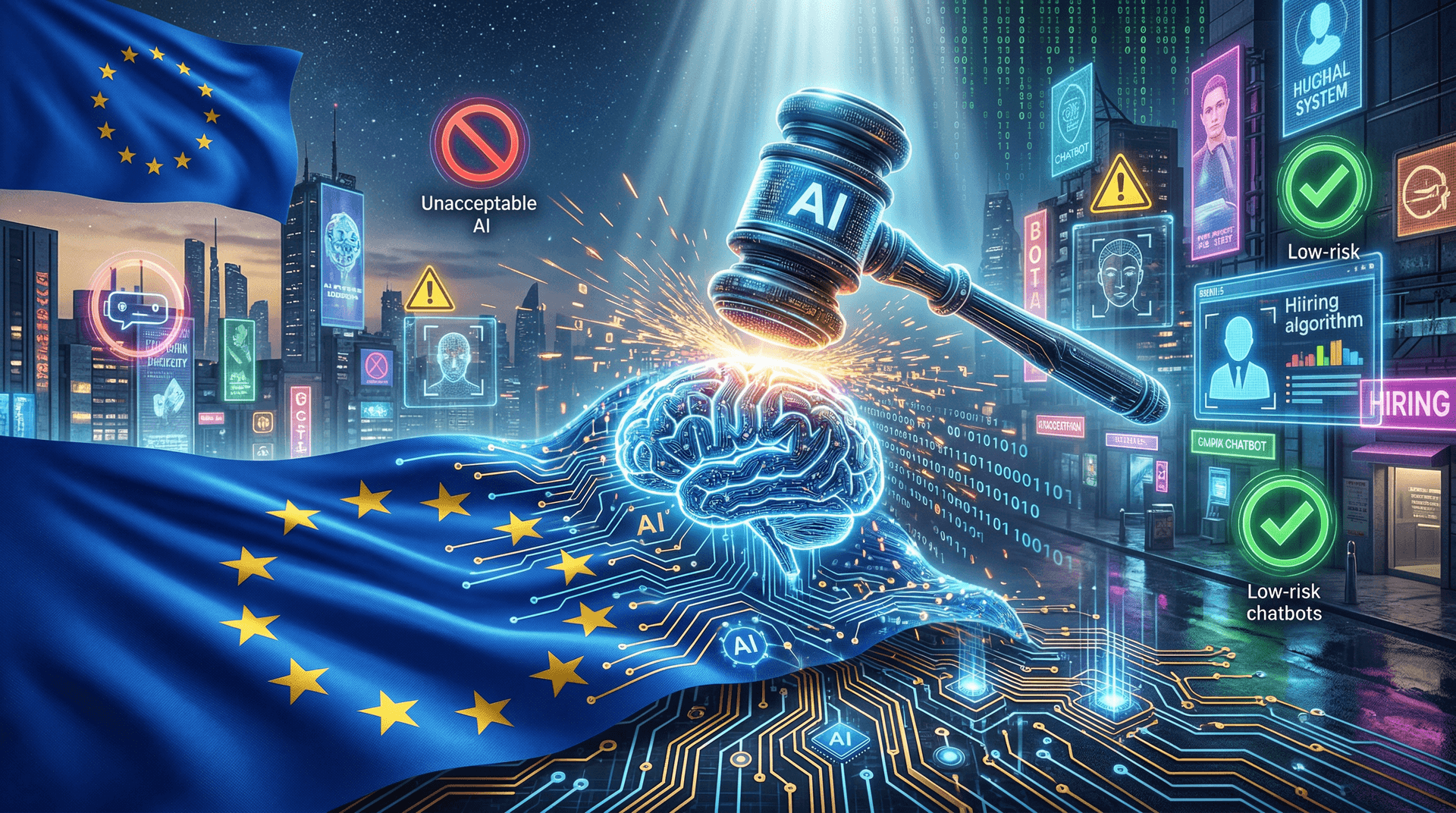
The Act, proposed by the European Commission in April 2021, underwent intense negotiations among EU member states, the European Parliament, and the Council. After trilogue agreements in December 2023 and final approval in May 2024, it now becomes law 20 days after publication. This phased rollout—spanning from today until 2027—introduces a risk-based approach that classifies AI systems into four categories: unacceptable risk, high risk, limited risk, and minimal risk.
Understanding the Risk-Based Framework
At its core, the EU AI Act prohibits "unacceptable risk" AI practices outright, effective six months from today (February 2, 2025). These include manipulative subliminal techniques causing harm, social scoring by governments, real-time biometric identification in public spaces (with exceptions for law enforcement), and emotion recognition in workplaces or schools.
High-risk AI systems—such as those used in hiring, credit scoring, medical devices, and critical infrastructure—face stringent requirements. Providers must implement risk management systems, ensure high-quality data governance to mitigate biases, provide transparency through technical documentation, and enable human oversight. Conformity assessments, CE marking, and registration in an EU database are mandatory before market placement.
Limited-risk systems, like chatbots and deepfakes, require transparency obligations: users must be informed they're interacting with AI, and synthetic content must be labeled. Minimal-risk applications, such as spam filters or video games, face no obligations.
General-purpose AI (GPAI) models, including foundation models like those powering ChatGPT or Stable Diffusion, are regulated separately. Systemic-risk GPAI models (those exceeding computational thresholds) must conduct model evaluations, report serious incidents, and prepare for cybersecurity threats.
Timeline of Implementation
The Act's staggered enforcement minimizes disruption:
- August 1, 2024: Entry into force.
- August 2, 2025: Codes of practice for GPAI.
- August 2, 2026: Full rules for high-risk systems in regulated products.
- August 2, 2027: All other high-risk systems comply.
National authorities will oversee enforcement, with fines up to €35 million or 7% of global annual turnover for prohibited AI violations—surpassing GDPR penalties.
Implications for AI Startups and Developers
For Europe's burgeoning AI startup ecosystem, the Act is a double-edged sword. On one hand, it promises a level playing field by imposing obligations on all actors, including non-EU providers placing AI on the EU market (extraterritorial reach akin to GDPR). This could boost trust and attract investment; the EU's AI Pact, a voluntary initiative launched today, encourages early compliance.
However, compliance burdens may stifle innovation. Startups like those developing machine learning models for healthcare or autonomous vehicles must navigate complex assessments, potentially delaying launches and increasing costs. Smaller firms may struggle with documentation and audits, prompting calls for simplified rules for SMEs.
U.S. tech giants—OpenAI, Google, Meta—face significant adjustments. Models trained on EU data or deployed to EU users must comply, influencing global practices. Elon Musk's xAI and Anthropic, with their frontier models, will scrutinize systemic-risk thresholds based on floating-point operations (FLOPs).
Industry Reactions and Global Ripples
Reactions are mixed. The AI Alliance, co-founded by Meta and Intel, welcomes harmonized rules but warns of fragmentation risks. Critics, including the German Association for Startups, argue the Act could drive AI development to less-regulated jurisdictions like the U.S. or China.
Globally, the EU AI Act sets a benchmark. The U.S. grapples with fragmented state laws and voluntary executive orders (e.g., Biden's 2023 AI Safety Order). China's AI regulations emphasize security, while the UK's pro-innovation approach contrasts sharply.
This legislation arrives amid rapid AI advances: multimodal models like GPT-4o (May 2024) and Llama 3.1 (July 2024) underscore the need for governance. Bias in machine learning—evident in facial recognition disparities—highlights why data governance is paramount.
Challenges Ahead: Enforcement and Innovation Balance
Enforcement hinges on the European AI Office, established under the Act, and national Market Surveillance Authorities. Adequacy decisions will facilitate data flows, but interoperability with non-EU frameworks remains uncertain.
For machine learning practitioners, the Act mandates techniques like adversarial testing and bias audits, embedding responsibility into the AI lifecycle—from training to deployment.
As the world watches, today's milestone signals a shift: AI is no longer unregulated Wild West tech but a governed domain. Whether it accelerates safe innovation or hampers competitiveness will define the next chapter.
Europe's bold stroke could inspire—or isolate—in the global AI race. Stakeholders must now operationalize compliance, ensuring AI benefits humanity without compromising rights.
Word count: 912