On February 7, 2023, Microsoft made waves in the tech world with the unveiling of its revamped Bing search engine and Edge browser, both supercharged by cutting-edge AI technology from OpenAI. This isn't just an incremental update; it's a bold leap into the era of conversational AI for everyday search, directly challenging Google's long-standing dominance.
The Big Reveal: What’s New in Bing and Edge?
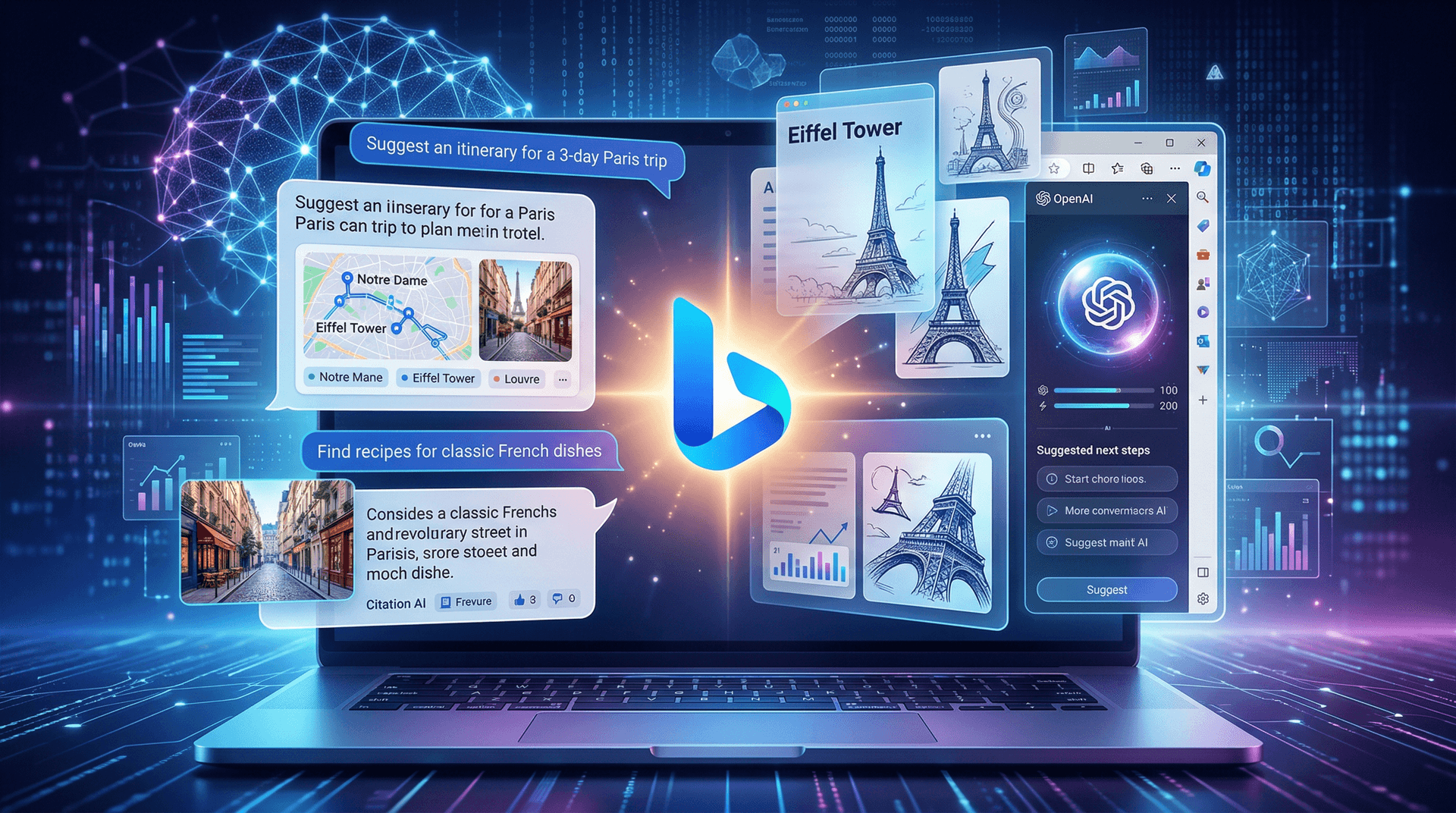
At a virtual event, Microsoft CEO Satya Nadella and Bing team leads demonstrated the new Bing in action. Powered by a proprietary next-generation version of OpenAI's GPT model—building on the GPT-3.5 architecture behind ChatGPT—the search engine now supports natural language conversations. Users can chat with Bing about anything: planning trips, summarizing news, generating creative content, or even debating ideas.
Key features include:
- Chat Mode: Bing engages in multi-turn conversations, maintaining context across queries. For instance, ask about the best laptops, then refine with budget constraints or comparisons—Bing adapts seamlessly.
- Creative Mode: Generates images, poems, or stories on demand, leveraging DALL-E integration.
- Balanced and Precise Modes: Options for factual responses or more exploratory answers, with citations to sources for transparency.
- Edge Sidebar Integration: The browser's new AI copilot floats on the side, summarizing pages, generating emails, or comparing products without leaving your tab.
Early testers accessed a preview via bing.com/new, with waitlists forming rapidly. Microsoft emphasized safety measures, like blocking harmful content and watermarking AI-generated images.
Microsoft's OpenAI Bet Pays Off
This launch stems from Microsoft's $10 billion investment in OpenAI announced in January 2023. The partnership has accelerated, with Bing now the first major product to embed this tech at scale. "AI will redefine how we search and create," Nadella said, highlighting productivity gains for consumers and enterprises.
Unlike ChatGPT's standalone chatbot, Bing ties AI to real-time web data, grounding responses in current information—a limitation of pure LLMs. This hybrid approach addresses hallucinations, where AI invents facts, by blending search indexing with generative capabilities.
Sparking an AI Arms Race with Google
The timing couldn't be more provocative. Just days earlier, Google previewed its Bard chatbot, powered by LaMDA, to select users. Microsoft's demo subtly nodded to competitors, positioning Bing as superior in benchmarks. Early tests show Bing outperforming Bard in relevance and creativity.
Google's response? CEO Sundar Pichai fast-tracked Bard's rollout amid internal pressure post-ChatGPT's viral success. Analysts predict this rivalry will drive rapid innovation, benefiting users with smarter tools.
"Microsoft is flipping the script on search," said Gartner analyst Whit Andrews. "Traditional blue links are giving way to AI dialogues, potentially eroding Google's 90% market share."
Implications for AI and Machine Learning
From an AI perspective, this marks a pivotal shift. Large language models (LLMs) move from research curiosities to consumer staples. Challenges remain: compute costs, ethical biases, and energy demands. Microsoft claims optimizations reduce latency to under 1 second for most queries.
For machine learning practitioners, Bing's architecture offers lessons in retrieval-augmented generation (RAG), combining vector databases with transformers for accurate responses. Open-sourcing elements could spur ecosystem growth, though proprietary guardrails protect core IP.
Startups in AI search space, like Perplexity AI or You.com, gain tailwinds but face intensified competition from Big Tech.
User Reactions and Early Feedback
Waitlist sign-ups surged past 1 million within hours. Social media buzzed with demos: Bing crafting personalized workout plans, debugging code snippets, even role-playing historical figures. Critics noted occasional inaccuracies, but Microsoft's citation feature builds trust.
Privacy hawks raised flags on data usage for training, but Microsoft reiterated opt-out options and EU GDPR compliance.
The Road Ahead
Microsoft plans broader rollout soon, with mobile apps and Windows integration. Enterprise versions via Azure AI could transform business intelligence.
As AI permeates search, expect ripple effects: ad models evolving to sponsored chats, SEO shifting to conversational optimization, and new regulations on AI transparency.
This isn't hype—it's the dawn of agentic AI, where tools anticipate needs. Microsoft, once search's underdog, now leads the charge. Google et al. must counterpunch, but for users, the future looks dialogic and dynamic.
In the AI & ML arena, February 2023 will be remembered as Bing's renaissance. Stay tuned as these technologies mature.
(Word count: 912)