
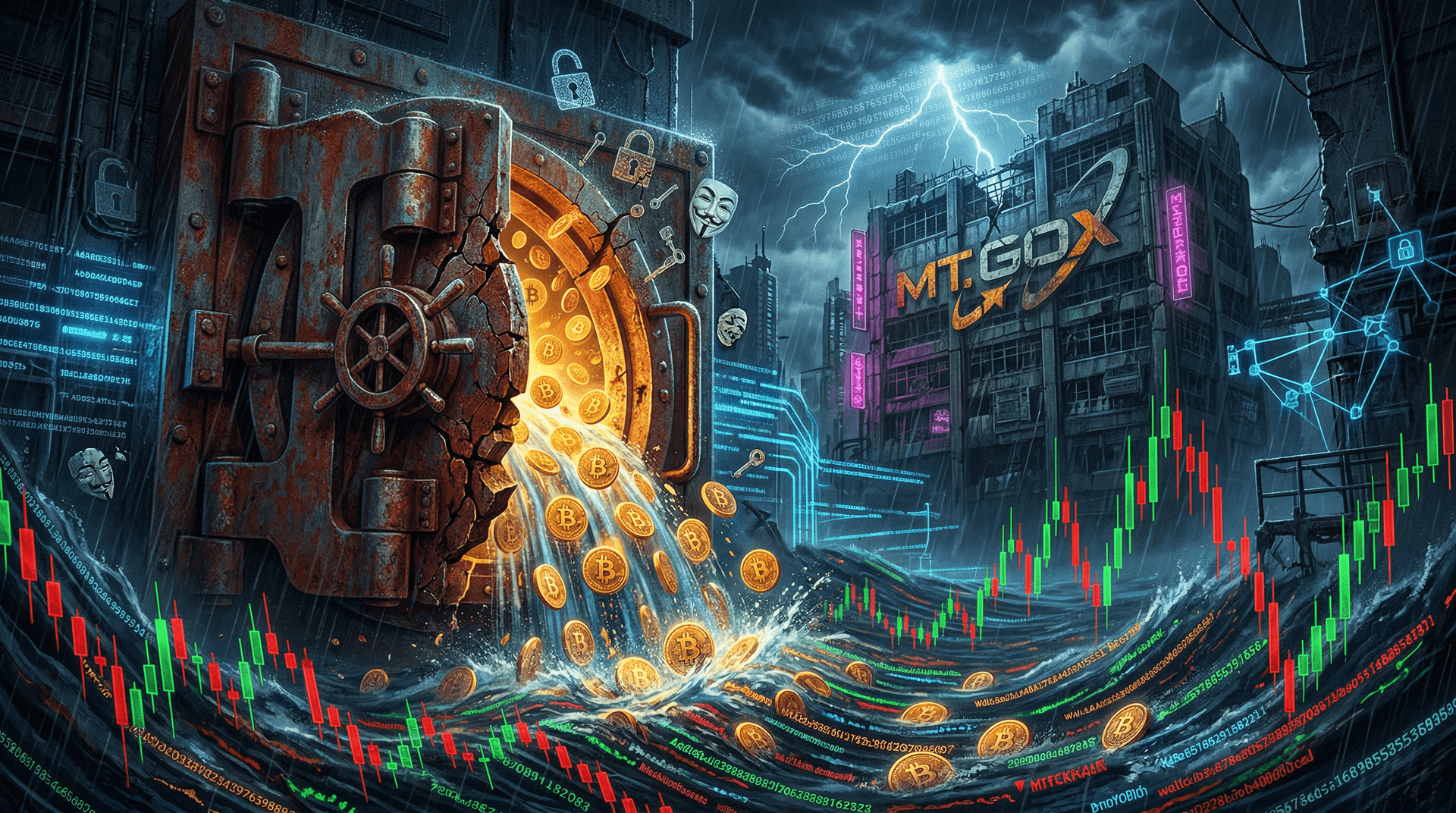
In a moment that has reverberated through the cryptocurrency world, the trustee of the defunct Mt. Gox exchange began distributing Bitcoin and Bitcoin Cash to creditors on July 5, 2024. This event, delayed for nearly 10 years since the infamous 2014 hack, marks one of the most significant liquidity events in crypto history, with potential distributions totaling around 140,000 BTC—valued at over $8 billion at current prices—and 143,000 BCH.
The Ghost of Mt. Gox Past
Mt. Gox, once the world's largest Bitcoin exchange handling 70% of global trading volume in 2013, collapsed spectacularly in February 2014. A massive security breach led to the loss of approximately 850,000 BTC, equivalent to about $450 million at the time but worth tens of billions today. The hack exposed glaring vulnerabilities in early crypto exchanges: poor wallet management, inadequate multi-signature setups, and insufficient cybersecurity protocols.
Nobuaki Kobayashi, appointed as trustee in 2014, has spent a decade navigating Japanese courts, creditor claims, and asset recovery. By 2021, Kobayashi revealed holdings of 141,686 BTC and 142,846 BCH after clawing back some funds from related entities. The repayment plan, approved earlier this year, set a deadline of October 2024 for distributions via partner exchanges like Kraken, Bitbank, and SBI VC Trade.
July 5: The Distributions Begin
The process kicked off quietly on July 5, with on-chain analysts spotting large transfers from Mt. Gox's known wallet addresses (e.g., starting with 1Feex). Blockchain explorers like Arkham Intelligence and Whale Alert lit up as transactions moved billions in BTC to exchange deposit addresses. Creditors could elect to receive BTC, BCH, or fiat equivalents through approved rehabilitation firms.
By July 22, over 20,000 BTC had reportedly been distributed, though exact figures remain opaque due to privacy measures. Kraken confirmed handling U.S. creditor payouts, emphasizing compliance with KYC/AML standards—a far cry from Mt. Gox's Wild West era.
!Mt. Gox wallet transfers visualized on blockchain explorer
Market Turmoil and Recovery
The announcement alone sparked fear. Bitcoin's price plummeted from $69,000 in late June to below $54,000 by July 5, exacerbated by concurrent sales from the German government (offloading 50,000 seized BTC). Trading volume surged, with futures markets pricing in downside risk.
However, markets have shown resilience. BTC rebounded to around $67,000 by July 22, buoyed by strong ETF inflows (BlackRock's IBIT alone added $500 million weekly) and broader adoption signals. Analysts from Glassnode note that Mt. Gox BTC represents just 0.7% of circulating supply, suggesting limited long-term pressure if recipients hold rather than dump.
On-chain data reveals nuance: Only a fraction of distributed coins hit sell walls. Long-term holders dominate Mt. Gox claimant demographics, per surveys, implying many will HODL.
Cybersecurity Lessons from the Hack
Mt. Gox's downfall was a cybersecurity catastrophe. Hackers exploited a transaction malleability bug in Bitcoin's protocol, allowing double-spends and fraudulent withdrawals. CEO Mark Karpeles later admitted to running an unsecured "hot wallet" with user funds.
Today, this serves as a textbook case for blockchain startups. Modern exchanges employ hardware security modules (HSMs), multi-party computation (MPC) wallets, and proof-of-reserves audits. Firms like Fireblocks and Copper lead in institutional custody, using sharding and air-gapped systems.
The event highlights blockchain's immutable ledger as a double-edged sword: The hack's funds were traceable, aiding partial recovery, but also enables real-time scrutiny of repayments.
Implications for Startups and Blockchain Ecosystem
For crypto startups, Mt. Gox underscores the need for robust compliance from day one. Regulatory clarity is emerging—Japan's FSA has tightened exchange rules post-Mt. Gox—but global fragmentation persists.
Venture capital in blockchain security is booming. Startups like zkGuard (zero-knowledge proofs for audits) and Anchain.AI (AI-driven threat detection) raised millions in 2024, directly addressing exchange vulnerabilities.
DeFi protocols, often touted as "trustless," face similar risks: flash loan exploits and oracle manipulations echo Mt. Gox's centralization pitfalls. Layer-2 solutions on Ethereum and Solana incorporate MEV protection and timelocks to mitigate.
Broader Market and Regulatory Ripples
This repayment tests market maturity. Unlike 2014's panic, 2024's infrastructure—spot ETFs, stablecoin rails like USDT—absorbs shocks better. Institutional players like Fidelity and Galaxy Digital view it as a supply overhang to price in.
Regulators watch closely. The U.S. CFTC and SEC cite Mt. Gox in enforcement actions, pushing for clearer crypto frameworks. Japan's success in orderly resolution could model international approaches.
Looking Ahead: October Deadline Looms
With distributions ramping up, all eyes are on Q3. If sales accelerate, BTC could test $50,000 supports; if holders prevail, new highs beckon amid halving cycle dynamics.
Mt. Gox's saga closes a dark chapter, affirming blockchain's evolution from hacker playground to trillion-dollar asset class. For tech innovators, it's a reminder: Security isn't optional—it's foundational.
Word count: 912