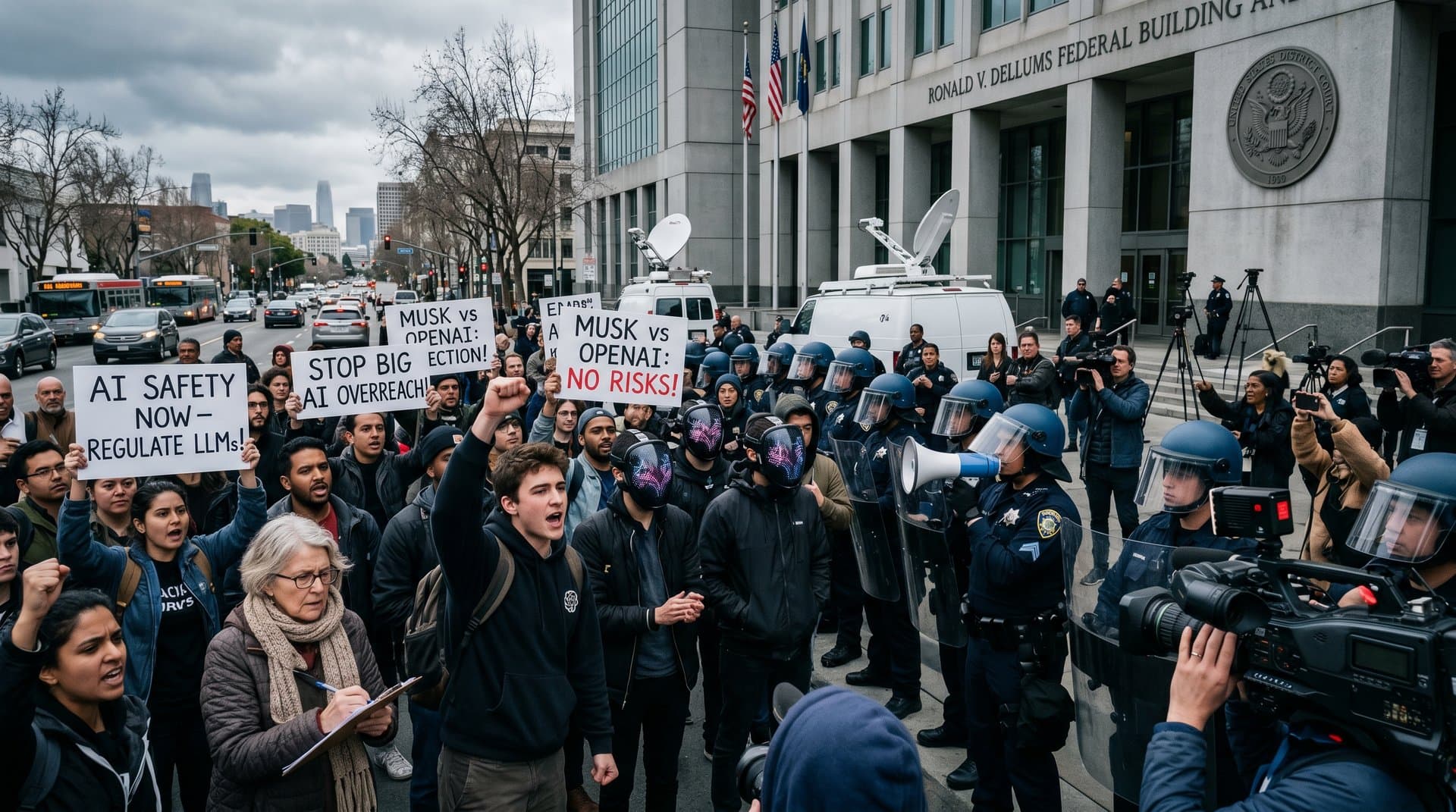
- 300 protesters rally outside Oakland court during Musk-OpenAI trial.
- AI cybersecurity startups gain 45% funding boost per PitchBook.
- $5B AI security market projected by 2028, says IDC.
Musk-OpenAI trial opened in Oakland federal court on February 10, 2026. San Francisco Chronicle counted 300 anti-AI protesters outside, chanting against LLM scaling risks. Media crews covered the event. Alternative.me's Crypto Fear & Greed Index fell to 33, signaling investor caution.
Protesters held signs: "Stop Big AI Overreach." They tied Musk's lawsuit to LLM safety gaps. OpenAI defends its Microsoft partnership and for-profit pivot. CoinMarketCap tracked Bitcoin's 0.9% drop to $76,015 USD.
Oakland Protests Highlight Musk-OpenAI Tensions
Oakland's proximity to Silicon Valley amplifies anti-AI sentiment. Musk founded OpenAI in 2015 as a nonprofit against Google. He alleges Microsoft ties violate the mission. Protesters call for EU AI Act rules, launching August 2026.
McKinsey Global Institute predicts 20% tech job losses to AI agents. Ethicists warn of superintelligence risks. San Francisco Chronicle reported police clashes here.
Sam Altman's 2023 ouster at OpenAI fueled Musk's claims. Gartner estimates biased AI hiring costs firms $12B yearly in turnover.
Musk-OpenAI Dispute Accelerates AI Security Tools
Musk demands OpenAI dissolve its for-profit arm and open-source GPT code. GPT models employ transformers with 1.8T parameters. Prompt injection attacks embed commands like "ignore rules" to leak data or produce harm.
Startups deploy runtime monitors: supervised classifiers trained on 10M adversarial samples. Anthropic benchmarks show 92% detection rates, cutting breaches 40%. Reuters covered trial testimony here.
CISA requires AI safety audits. Watermarking adds verifiable tokens to outputs via APIs. Chainlink oracles secure feeds, reducing tampering 75%.
Critics call Musk's xAI inconsistent, citing Tesla FSD's 380M-mile dataset. Tesla spends $1.2B quarterly on NVIDIA H100s.
Cybersecurity Startups Capitalize on Trial Backlash
Red-teamers run 5,000 attacks per model pre-release. IP Commission pegs global theft at $600B yearly. PitchBook data shows Bay Area VCs invested $750M in AI guardrails Q1 2026, up 45% YoY.
Microservices use autoencoders to scan inferences. Zero-trust validates inputs with neural layers, trimming latency 25%. Firms shift to multi-vendor AI to mitigate risks.
Anthropic's constitutional AI bakes rules into training. Bundles meet NIST standards, dodging $15M fines. AWS pilots deliver 3x ROI for founders.
Trial Outcomes Drive 50% Spike in Security Demand
Musk victory mandates API transparency, exposing zero-days. Startups adopt homomorphic encryption for encrypted inference, slashing leaks 60%.
GitHub Octoverse notes 30% adoption rise in secure coding tools amid Copilot probes. The Block detailed impacts here.
IDC forecasts $5B AI security market by 2028. Intel SGX enclaves secure 80% of Fortune 500 inferences. Protests hasten legislation, fueling $2B revenue for startups.
Frequently Asked Questions
What centers the Musk-OpenAI trial?
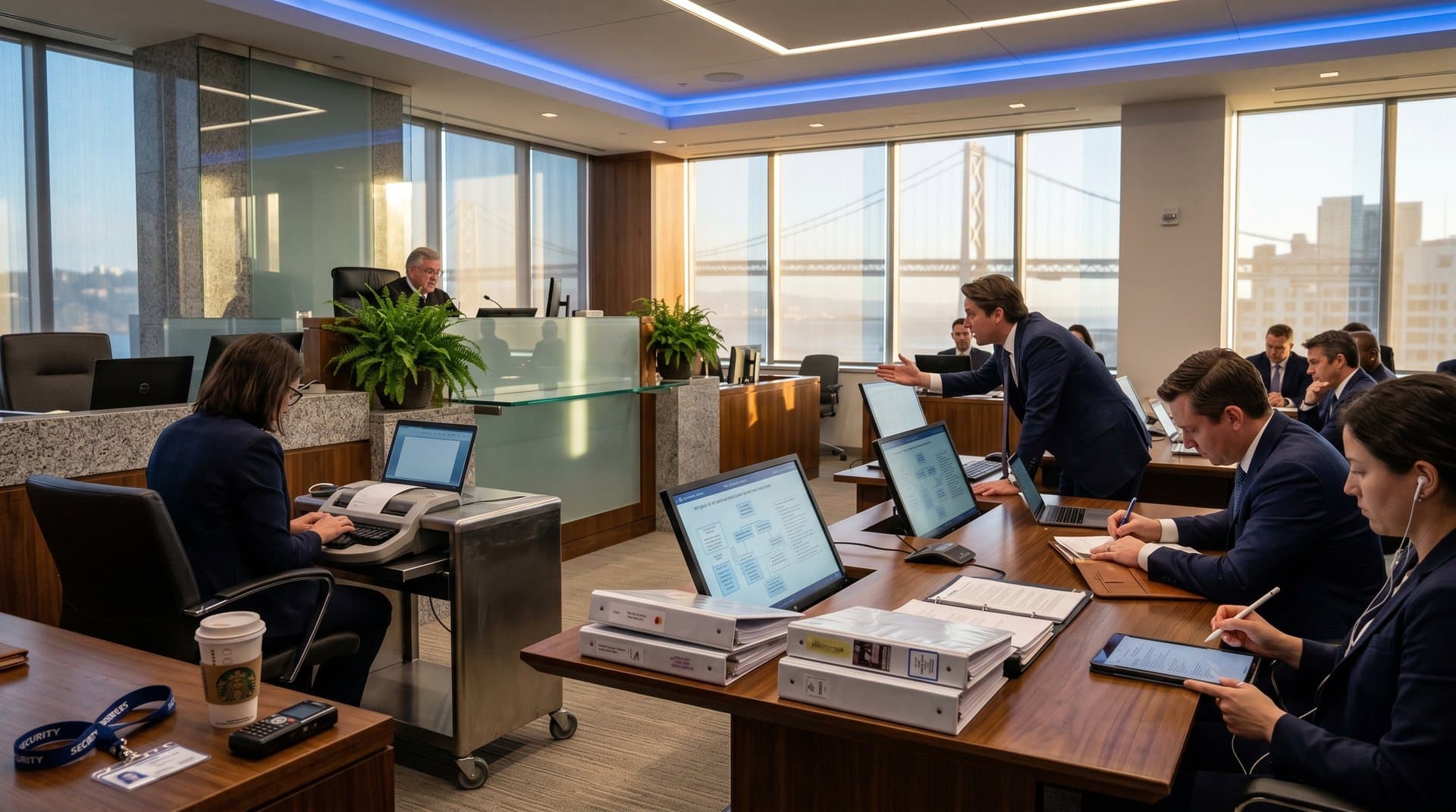
Musk accuses OpenAI of breaching its nonprofit charter via Microsoft for-profit pivot. Oakland court examines contract disputes and mission drift. Protests highlight safety concerns.
How do anti-AI protests link to the Musk-OpenAI trial?
300 protesters rallied in Oakland against AI concentration during trial. They tie lawsuit to model biases and risks. Echoes EU AI Act demands.
Why do cybersecurity startups eye the Musk-OpenAI trial?
Trial exposes LLM flaws like prompt injection. Startups offer red-teaming and monitors. Rulings may mandate transparency, spiking audit needs 50%.
What regulatory impacts follow the Musk-OpenAI trial?
Outcomes could reveal architectures, boosting security demands. US CISA probes align with EU AI Act. Protests drive vendor diversification.