
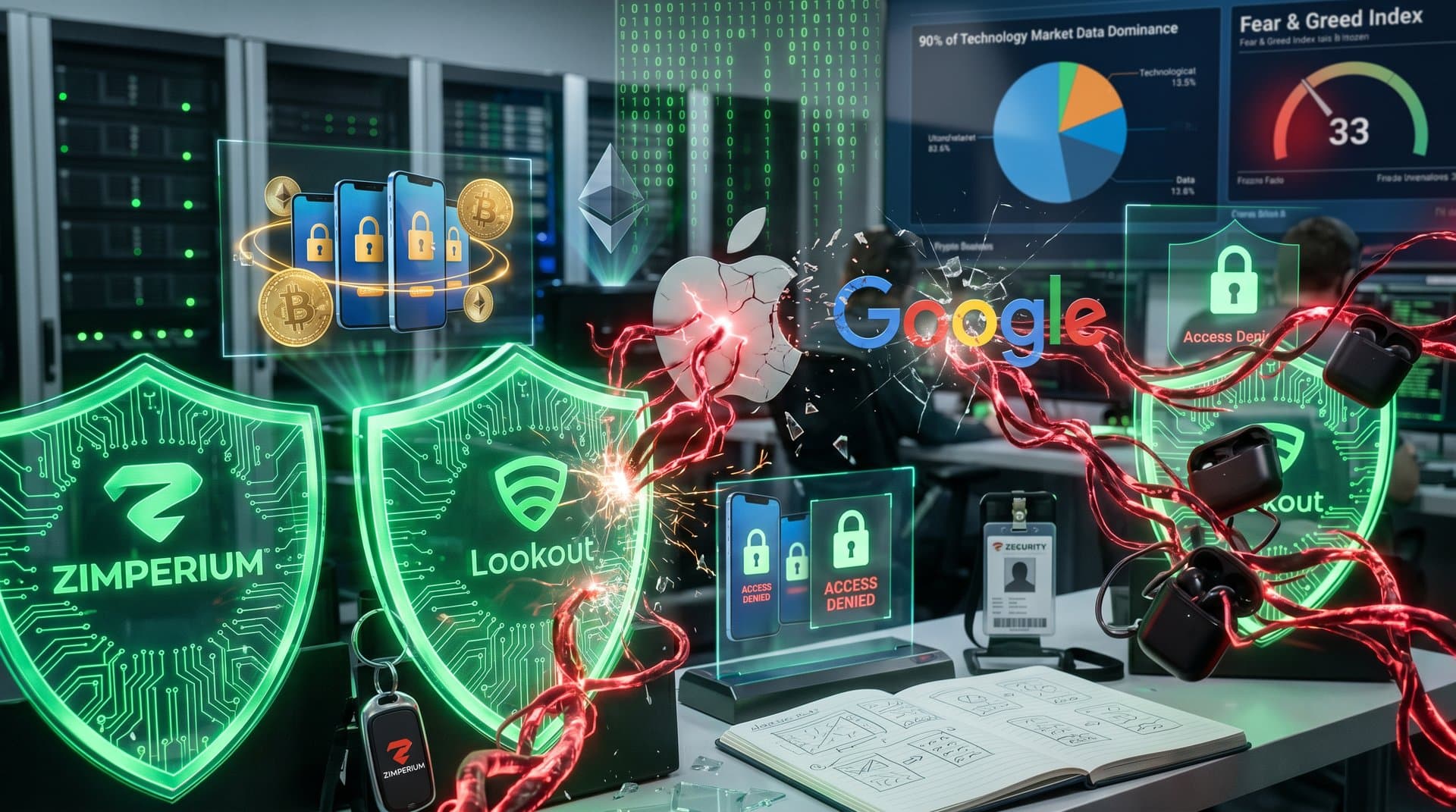
- Fear & Greed Index at 33 heightens remote phone control risks for $100B+ crypto wallets.
- Startups secure $250M funding in 2024 to block Big Tech's 95% AI-dominated locks.
- Zimperium tools cut enterprise costs 30% via signal isolation and secure enclaves.
Cybersecurity Startups Counter Big Tech Remote Phone Control
Cybersecurity startups launched AI-resistant defenses against Apple and Google's remote phone control on October 10, 2024. On-device AI like Gemini Nano enables predictive locks and wipes via Find My and Find My Device. Crypto Fear & Greed Index dropped to 33 (Alternative.me). BTC fell 0.6% to $76,436 (CoinGecko).
Big Tech markets these as theft protection. Gemini Nano, a lightweight multimodal model, runs locally to analyze usage patterns and detect anomalies.
Users face total device loss, hitting crypto wallets hard.
Technical Breakdown of Remote Phone Control
Apple's Activation Lock binds iPhones to iCloud, blocking resets without credentials (Apple Support HT213223). Google's Factory Reset Protection mirrors this for Android (Google Support 6160491). Samsung integrates Knox for enterprise-grade controls.
Gemini Nano processes sensor data on-device using transformer architectures trained on theft patterns. It triggers geofence alerts and odd login detection, issuing erase commands without user input—even wiping MetaMask seeds.
Zimperium's Mobile Threat Defense audits these APIs in real-time (Zimperium docs). It flags unauthorized signals before execution.
Startups Challenge Big Tech's 95% Smartphone Dominance
Apple and Google hold 95% of global smartphones (StatCounter Q3 2024). Remote controls activate by default with few opt-outs.
Predictive AI cuts theft recovery to minutes, boosting enterprise recovery rates by 40% (Gartner 2024). Yet it erodes user control.
Startups deploy opt-out proxies and secure enclaves. Zimperium's zIPS isolates control signals in kernel space. Lookout's PhantomCore sandboxes them via eBPF filters.
Venture capital poured $250M into mobile defenses in 2024 (Crunchbase), fueled by crypto risks.
Key Tools Blocking AI Remote Phone Commands
Zimperium intercepts Find My pings, trains evasion models on 10B+ signals, and enables whitelisting.
Lookout blocks traffic from Apple/Google servers with zero-trust policies (CISA Mobile Guide). It protects wallets dynamically.
Jamf and Absolute install tamper-proof agents. They shield seeds in ARM TrustZone enclaves.
Users install via app stores. Dashboards log and revoke attempts in real-time.
Crypto Wallet Risks from Remote Wipes
Mobile wallets like Coinbase Wallet and Trust hold billions. ETH rose 0.2% to $2,294 (CoinGecko). XRP fell 0.6% to $1.38; BNB gained 0.1% to $624; USDT held $1.00.
Single-device reliance invites wipe disasters.
Startups offer air-gapped backups and multi-sig sync. AI overreach detectors align with EFF guidelines (EFF analysis).
$250M Investments Highlight Financial Backlash
Fear & Greed at 33 drives crypto holders to defenses. Remote controls threaten $100B+ mobile assets (Chainalysis 2024 Crypto Crime Report).
Startups slash enterprise costs 30% through signal isolation (Zimperium benchmarks). GrapheneOS provides de-Googled ROMs for full sovereignty.
Mobile security grows at 40% CAGR (Gartner 2024). Investors fund policy pushes for device ownership rights.
Big Tech's remote phone control evolves from asset to liability. Startups capture market share with precise, verifiable protections.
Frequently Asked Questions
What is remote phone control?
Remote phone control lets Apple and Google lock or wipe devices remotely. AI like Gemini Nano predicts threats via anomaly detection.
How do cybersecurity startups block it?
Zimperium and Lookout intercept signals, audit APIs, sandbox apps. Dashboards enable user control and whitelisting.
Why does it threaten phone ownership?
Big Tech kill switches enable AI-enforced actions. Ownership evolves to licensed access.
How does it impact crypto users?
Wipes erase wallets holding BTC at $76,436. Startups use enclaves and backups for protection.