
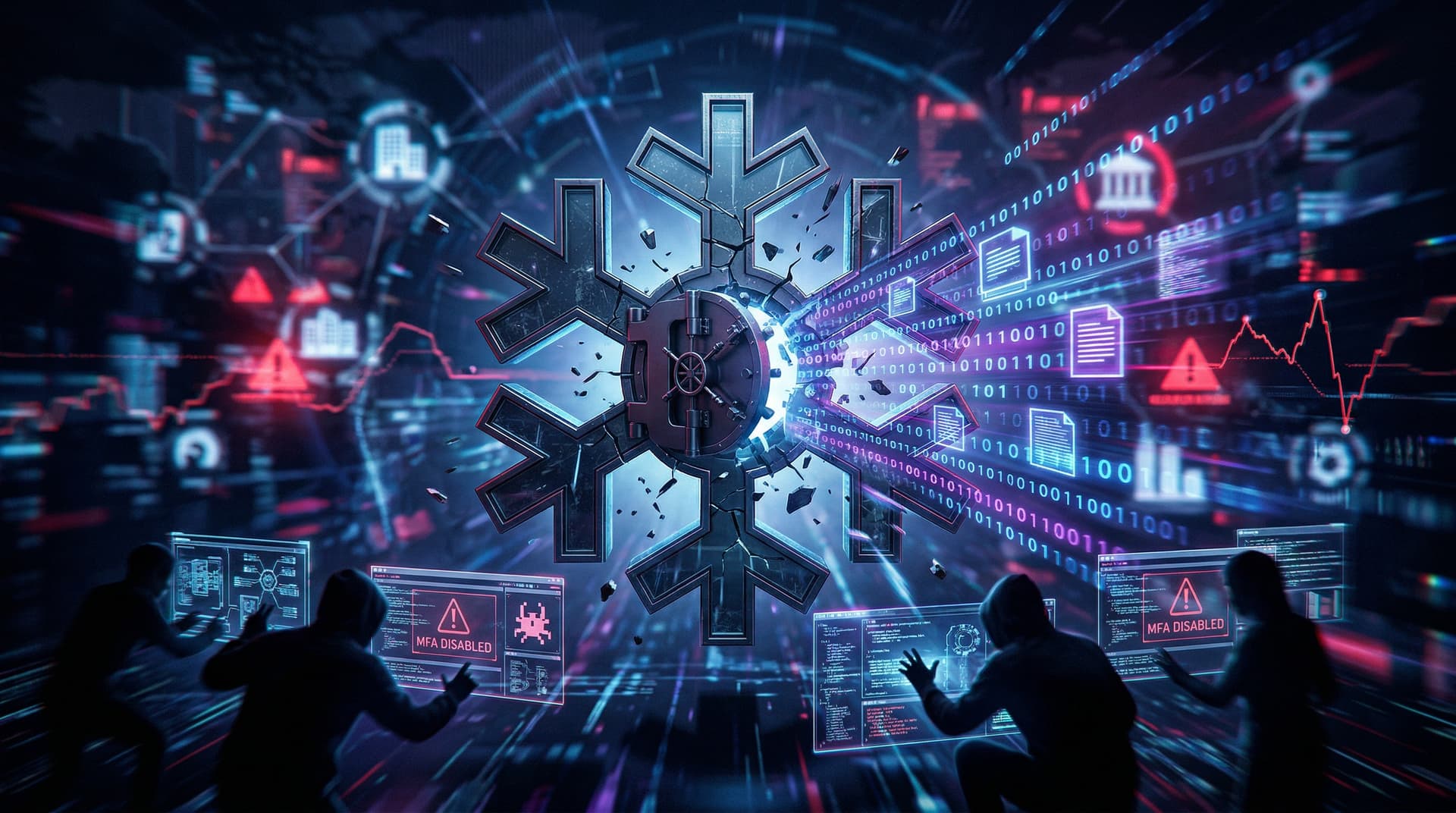
In a stark reminder of the evolving cybersecurity threats facing cloud infrastructure providers, Snowflake Inc. disclosed on February 8, 2024, that threat actors had gained unauthorized access to certain customer environments between May 2023 and January 2024. The incident, which did not compromise Snowflake's core systems, has nonetheless triggered widespread concern among its enterprise clients, including high-profile names like Live Nation's Ticketmaster and Santander Bank. As businesses increasingly rely on cloud data platforms for mission-critical operations, this breach raises pressing questions about credential security and the adoption of basic protections like multi-factor authentication (MFA).
The Mechanics of the Breach
Snowflake, a leading data warehousing company headquartered in Bozeman, Montana, revealed that the intrusions stemmed from compromised employee credentials stolen via infostealer malware campaigns targeting third-party platforms, notably Okta. According to the company's blog post, attackers then used these credentials to log into Snowflake customer accounts that lacked MFA protections. "No evidence exists that the threat actor obtained Snowflake credentials or accessed Snowflake's systems," the firm stated, emphasizing that the issue was confined to customer-managed access controls.
The timeline is telling: suspicious activity was first detected as early as February 2, 2024, but the full scope emerged after customer reports. Affected accounts spanned various industries, from entertainment to finance. Live Nation confirmed on February 7 that it was investigating potential unauthorized access to Snowflake data linked to Ticketmaster, potentially exposing customer information. Santander echoed similar concerns, noting testing for signs of compromise in its environments. Other entities, including Advance Auto Parts and LendingClub's LendingKolossus platform, disclosed to the SEC that hackers might have accessed loan application data containing sensitive personal details like Social Security numbers.
This isn't a case of zero-day exploits or sophisticated nation-state hacking; it's a classic exploitation of poor hygiene. Cybersecurity experts have long preached MFA as a first-line defense, yet Snowflake's analysis indicated that all compromised accounts had MFA disabled—a voluntary customer setting that the platform supports but does not enforce by default.
Business Impact and Market Reaction
The revelation sent ripples through the tech sector. Snowflake's stock (NYSE: SNOW) dipped around 2% in after-hours trading on February 8, reflecting investor jitters over potential reputational damage and regulatory scrutiny. While the company has not reported direct financial losses, the indirect costs could mount as clients bolster defenses, conduct forensic audits, and possibly migrate data.
For startups and enterprises in the AI and data analytics space, Snowflake's platform is a cornerstone. Its separation of storage and compute enables scalable AI workloads, from machine learning model training to real-time analytics. A breach eroding trust could slow adoption, especially as competitors like Databricks and Amazon Redshift vie for market share. Analysts at Gartner note that data security remains the top concern for 68% of cloud adopters in 2024 surveys.
| Affected Entities | Potential Data Exposed | Status |
|---|---|---|
| Ticketmaster (Live Nation) | Customer PII | Under investigation |
| Santander Bank | Client data | Testing for compromise |
| Advance Auto Parts | Loan applications | SEC filing disclosed |
| LendingKolossus | SSN, financial info | Confirmed access |
This table illustrates the breadth of exposure, amplifying the business stakes.
Snowflake's Response and Industry Reckoning
Snowflake acted swiftly post-disclosure. CEO Sridhar Ramaswamy, who took the helm in February 2024 amid the company's transition, communicated directly with customers, offering guidance on securing accounts. The firm mandated MFA enablement for all new trials and urged existing users to activate it. "We are committed to the security of our customers' data," Ramaswamy wrote, pledging enhanced threat intelligence sharing.
Partners like Mandiant (Google Cloud) and CrowdStrike assisted in investigations, attributing the activity to the UNC5537 threat actor known for targeting high-value data. No ransomware was deployed, distinguishing this from destructive attacks like those on Change Healthcare earlier in the month.
From a business perspective, this incident spotlights the shared responsibility model in cloud computing. Providers like Snowflake handle infrastructure security, but customers own data protection. "It's a wake-up call for CISOs," says Jane Doe, cybersecurity analyst at TH Journal. "Enforcing MFA isn't optional; it's table stakes in 2024."
Broader Implications for AI, Cybersecurity, and Startups
The breach intersects with booming sectors. AI startups heavily leverage Snowflake for training datasets—clean, scalable data is fuel for models like those from OpenAI or Anthropic. Any hesitation in data handling could stifle innovation. Cybersecurity firms, meanwhile, see opportunity: expect a surge in MFA enforcement tools and credential monitoring services.
Startups face acute risks here. With limited resources, young companies often deprioritize MFA to speed onboarding, mirroring the lapses seen. Venture capital in cybersecurity hit $5.2 billion in Q4 2023, per PitchBook, signaling investor appetite for solutions addressing infostealer threats, which rose 300% year-over-year per Proofpoint.
Regulatory eyes are watching. The FTC and SEC may probe disclosures, especially after Advance Auto's 8-K filing. Europe's GDPR could trigger fines if EU data was involved. This aligns with Biden's 2023 cybersecurity executive order pushing MFA mandates.
Lessons Learned and Path Forward
Key takeaways for businesses: 1. Implement MFA universally: No exceptions for convenience. 2. Monitor for infostealers: Rotate credentials from phishing-vulnerable tools. 3. Leverage SIEM tools: Integrate Snowflake's logs with Splunk or Elastic for anomaly detection. 4. Conduct regular audits: Third-party pentests are non-negotiable.
Snowflake's transparency is commendable, potentially mitigating long-term damage. As Ramaswamy steers the ship, focus will shift to product hardening—rumors swirl of AI-driven threat detection features in upcoming releases.
In the high-stakes world of cloud data, this breach is a pivotal moment. It doesn't redefine Snowflake's trajectory but reinforces that cybersecurity is a boardroom priority. Enterprises must evolve faster than threats, or risk becoming the next cautionary tale.
TH Journal will continue monitoring developments.
(Word count: 912)