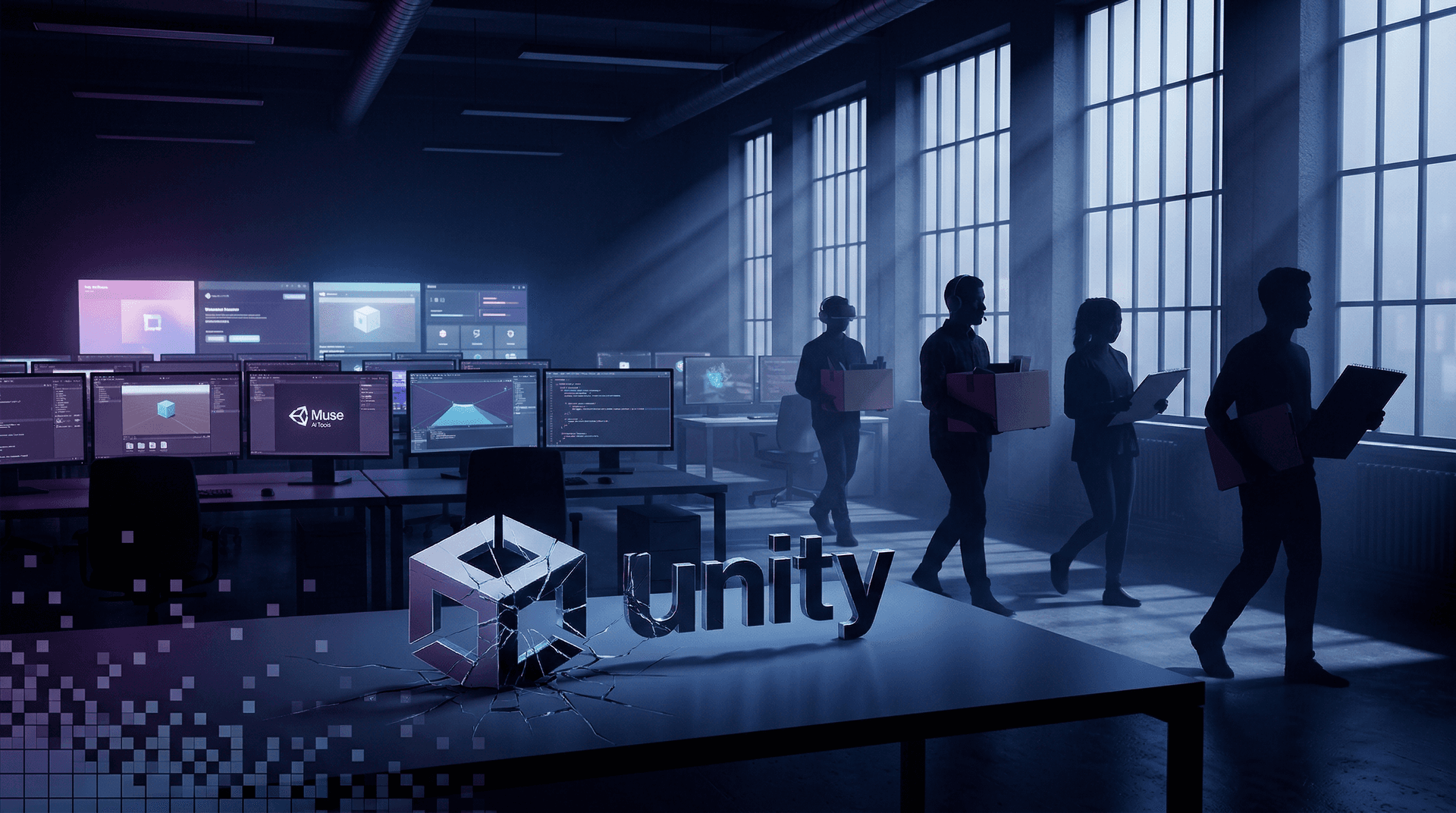
In a stark move signaling the harsh realities of the tech landscape in 2024, Unity Software (NYSE: U) revealed plans on January 4 to lay off about 1,800 employees—roughly 25% of its global workforce. The company also plans to shutter eight studios across Europe and terminate 39 in-development projects. This aggressive restructuring aims to slash operating expenses by approximately $185 million in 2024, allowing Unity to refocus on its most promising growth areas.
CEO James M. Whitehurst, who took the helm in December 2023 following the abrupt departure of John Riccitiello, framed the decision as essential for long-term sustainability. "We are making these changes to operate more effectively," Whitehurst stated in the official announcement. "This will position us to execute against our strategy to grow our core Create solutions while also building out our Operate solutions."
The Backdrop: Unity's Turbulent 2023
Unity's woes didn't emerge overnight. The company, best known for its ubiquitous game development engine that powers hits like Among Us, Genshin Impact, and Pokémon GO, has been grappling with a perfect storm of challenges. The September 2023 announcement of a controversial "runtime fee"—a per-install charge on games made with Unity—ignited widespread backlash from developers. Indie studios and major publishers alike decried it as predatory, fearing it would stifle innovation and drive creators to rivals like Unreal Engine.
The fallout was swift: Unity's stock plummeted over 50% in weeks, erasing billions in market value. Riccitiello resigned amid the uproar, and the company partially walked back the fee. But damage was done. Revenue growth slowed, with Q3 2023 results showing just 7% year-over-year increase to $548 million, missing Wall Street expectations. Subscription revenue, Unity's bread-and-butter, faced headwinds from freemium models and macroeconomic pressures like inflation and reduced gaming spend post-pandemic.
Unity's pivot under Whitehurst emphasizes three pillars: Create (tools for building games), Grow (user acquisition and monetization), and Operate (multiplayer services and cloud). The layoffs target non-core areas, including some marketing, operations, and underperforming projects, to reallocate resources toward AI-enhanced tools and enterprise solutions.
Layoff Details and Financial Impact
The cuts affect 1,800 roles out of Unity's roughly 7,500 employees as of late 2023. Studios in Finland, Sweden, and the UK are among those closing, with projects like Demeisen and others axed. Unity expects to incur $125 million in severance and related costs, mostly in Q1 2024, but projects annual savings of $185 million—translating to lower cash burn and potential profitability.
Analysts view this positively. Wedbush Securities' Nick Dhillon noted, "Unity's restructuring is a necessary reset, aligning costs with a more realistic growth trajectory in a maturing gaming market." Shares rose 5% in after-hours trading on the news, reflecting investor relief.
| Key Figures | Details |
|---|---|
| Layoffs | 1,800 (25% workforce) |
| Studios Closing | 8 (Europe-focused) |
| Projects Terminated | 39 |
| Expected Savings | $185M in 2024 |
| One-time Costs | $125M (Q1 heavy) |
Broader Tech Layoff Wave
Unity's action is part of a grim pattern in tech. 2023 saw over 260,000 job cuts across the sector, per Layoffs.fyi, with Big Tech leading: Google (12,000), Amazon (27,000), Meta (21,000). Early 2024 continues the trend—Salesforce trimmed 700 sales roles on January 4, Duolingo cut 10% of contractors on January 2, and Chegg axed 4% amid AI disruption fears.
Startups feel it too. In AI and cybersecurity, funding winters have forced belt-tightening. While Unity isn't a startup anymore (IPO'd 2020 at $13/share, now ~$32), its story resonates with developer ecosystem players. The runtime fee fiasco highlighted tensions between platform providers and creators, a dynamic playing out in AI tool adoption.
Unity's AI and Future Play
Despite cuts, Unity is doubling down on AI. Last year, it launched Unity Muse, an AI suite for asset generation, animation, and code assistance, aiming to boost developer productivity. Muse competes with tools from Adobe and Nvidia, positioning Unity as an AI-powered engine for the next-gen gaming and XR wave.
Enterprise push is key: Unity's Operate solutions target non-gaming verticals like automotive simulations (e.g., BMW uses it) and film VFX. With Apple Vision Pro looming (pre-orders Jan 19), Unity's real-time 3D tech could shine in spatial computing.
Challenges remain. Competition from Epic Games' Unreal (free for most, 5% royalty) is fierce. Unity must rebuild trust—recently pricing Unity 6 (2024 release) as free for <1M installs/year, with fees only above thresholds.
Industry Ripple Effects
For developers, this means uncertainty. Indie teams reliant on Unity may migrate, boosting Unreal or Godot (open-source). Studios closing disrupt local ecosystems in Europe, where Unity had a strong foothold.
Yet, restructuring could revitalize Unity. Whitehurst, ex-Red Hat CEO, brings enterprise chops—scaling open-source models. If executed well, 2024 could see Unity rebound, leveraging AI to capture share in a $184B gaming market (Newzoo 2023).
Looking Ahead
Unity's layoffs underscore tech's 2024 reality: efficiency over expansion. As AI reshapes software, companies must adapt or perish. For Unity, this is a painful but pivotal chapter. Investors watch Q1 earnings for proof of turnaround.
In the startup world, lesson clear: Innovate relentlessly, listen to users, balance growth with profitability. Unity's saga is a cautionary tale for AI hopefuls—hype alone won't sustain.
(Word count: 912)