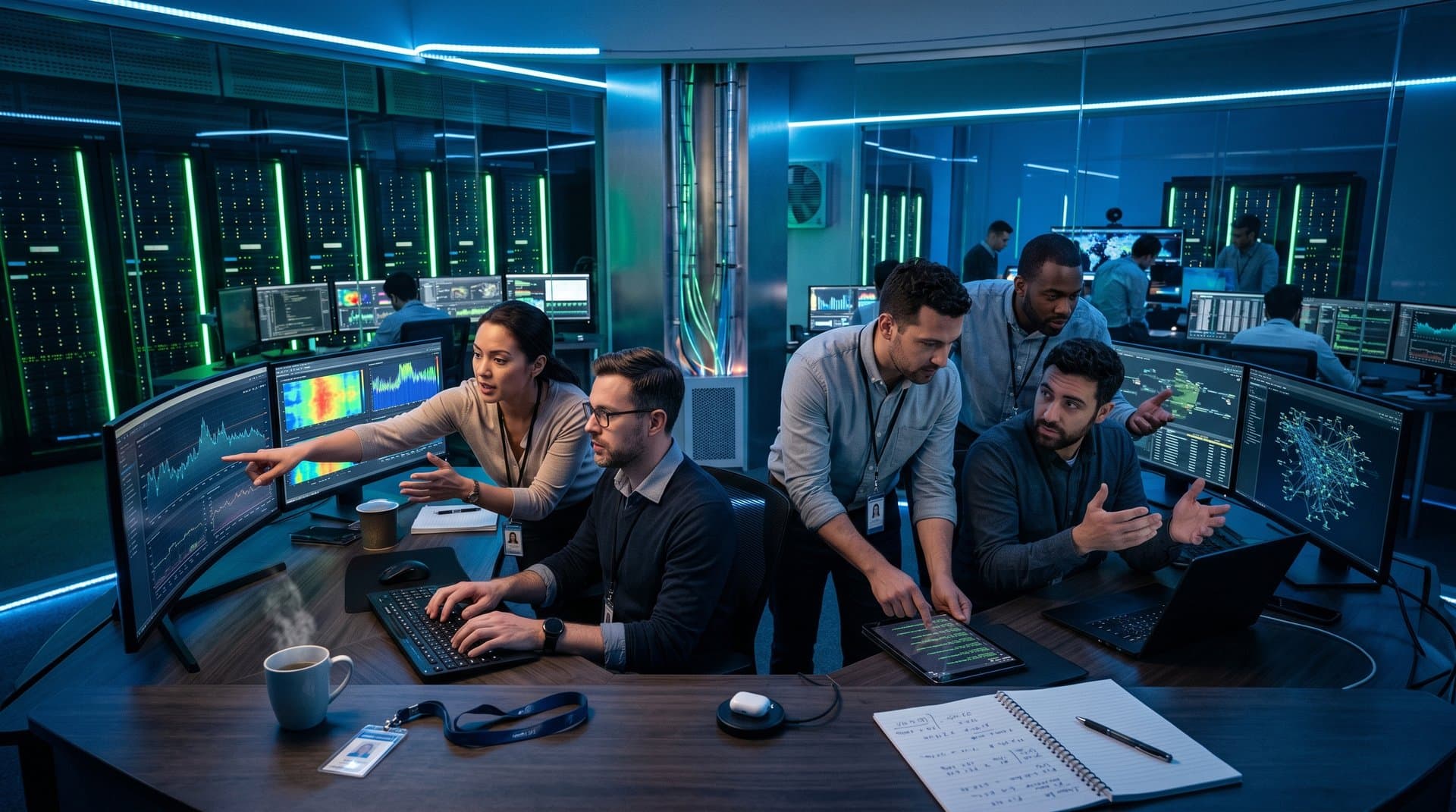
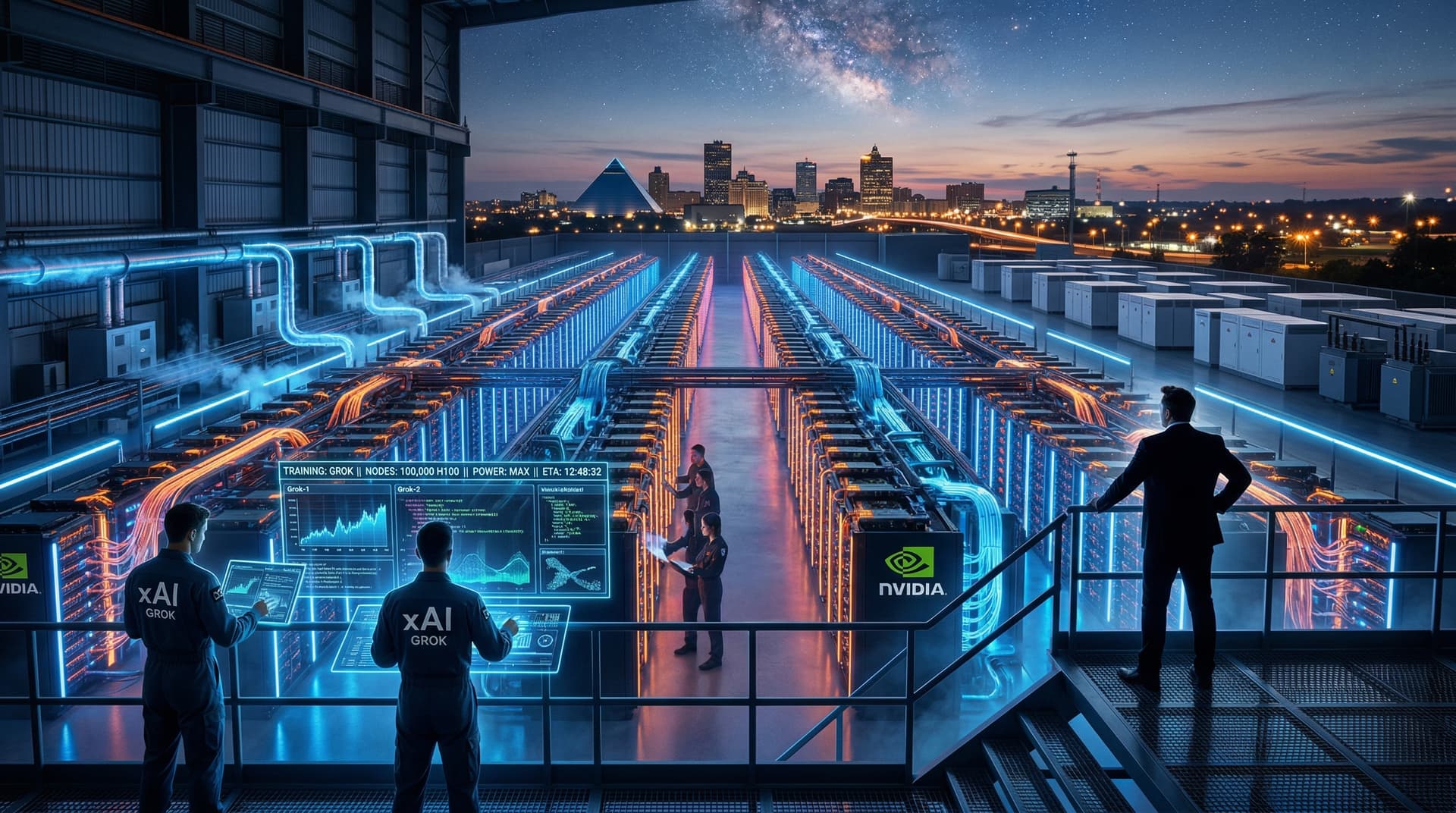
In a bold move that underscores the blistering pace of AI innovation, Elon Musk's xAI announced on September 3, 2024, the completion of Colossus—the world's largest single GPU cluster. Comprising 100,000 Nvidia H100 GPUs, this behemoth was assembled in a mere 122 days at a former Electrolux facility in Memphis, Tennessee. For AI startups grappling with skyrocketing compute demands, Colossus isn't just infrastructure; it's a manifesto for scaling ambition in the face of Big Tech dominance.
The Rise of xAI in the Startup Landscape
Founded in July 2023, xAI burst onto the scene with a mission to "understand the true nature of the universe." Musk, fresh from his OpenAI fallout, assembled a dream team including former Tesla, OpenAI, Google DeepMind, and Microsoft researchers. The startup's Grok chatbot, powered by the Grok-1 large language model, quickly gained traction for its irreverent personality and real-time knowledge via X (formerly Twitter) integration.
Financially, xAI has moved fast. In May 2024, it closed a $6 billion Series B round, catapulting its valuation to $24 billion. Investors like Andreessen Horowitz, Sequoia Capital, and Saudi Arabia's Kingdom Holding Company bet big on Musk's track record. This funding fueled Colossus, highlighting how well-capitalized startups can now rival hyperscalers in hardware deployment.
Inside Colossus: Specs and Speed
Colossus packs unprecedented scale:
- 100,000 Nvidia H100 GPUs: Each delivering up to 4 petaflops of AI performance, enabling training of massive multimodal models.
- Liquid-cooled design: Critical for efficiency in a 785,000-square-foot facility.
- 122-day build time: Powered by Nvidia, Supermicro, and a army of engineers working around the clock.
Musk tweeted, "Colossus has 100k liquid-cooled H100s. Training Grok 3 with it rn. Will be expanding soon to 200k H100s, then 300k." The cluster's interconnect uses Nvidia's NVLink and Spectrum-X Ethernet, minimizing latency for distributed training.
This isn't vaporware. xAI is already training Grok 3, expected by December 2024, with capabilities rivaling GPT-5. Colossus's power draw? Estimated at 150MW—enough for a small city—sourced via Tesla Megapacks and grid partnerships.
Why This Matters for AI Startups
AI training has become a compute arms race. Models like GPT-4 and Llama 3 demand clusters in the tens of thousands of GPUs. Startups previously rented from AWS or Azure, facing caps and costs exceeding $100 million per run. xAI's in-house approach slashes latency and costs by 30-50%, per industry benchmarks.
For peers like Anthropic, Mistral AI, and Perplexity, Colossus sets a new bar. Black Forest Labs' FLUX.1 image models and World Labs' spatial AI (fresh off a $230M raise on September 13) will eye similar builds. Yet, barriers loom: Nvidia backlog stretches to 2025, and power grids strain under AI's 100GW global forecast by 2026.
Memphis was chosen for cheap power ($0.04/kWh), tax incentives, and proximity to talent. xAI pledged 320 local jobs, boosting its startup cred amid criticisms of Musk's ventures.
Challenges and Criticisms
Not all smooth. Environmentalists flag AI's carbon footprint—Colossus could emit 50,000 tons of CO2 annually. Cooling demands 1 million gallons of water daily, sparking sustainability debates. Competitors like Meta (24k H100s) and Google (vast TPUs) counter with efficiency gains, but xAI prioritizes raw FLOPs.
Regulatory scrutiny intensifies. U.S. export controls on chips to China indirectly aid xAI, but antitrust probes into Nvidia loom. Startups must navigate this while scaling.
Broader Implications for the Ecosystem
Colossus accelerates the shift to "AI factories." Musk envisions gigawatt clusters by 2026, training models with trillions of parameters. This democratizes? No—deep pockets required. Yet, open-source efforts like Grok-1 could trickle down.
Nvidia benefits hugely; CEO Jensen Huang praised the build. Supermicro stock jumped 10% post-announcement. For startups, it's inspirational: xAI went from zero to hero in 15 months.
In cybersecurity, Colossus fortifies xAI against threats—dedicated clusters reduce cloud vulnerabilities. As AI phishing and deepfakes surge, secure infra is paramount.
Looking Ahead: xAI's Next Moves
Expansion to 300k GPUs looms, possibly Zetta-scale. Grok 3 promises uncensored, maximally truthful AI. Integration with Tesla Optimus robots and X platform could create a flywheel.
For the startup world, Colossus signals: Build big or go home. As AI capex hits $200B in 2024, nimble players like xAI redefine feasibility. Memphis may become Silicon South.
In sum, xAI's Colossus isn't mere hardware—it's a startup superpower, propelling the quest for AGI while challenging incumbents. Watch this space; the universe awaits understanding.
(Word count: 912)