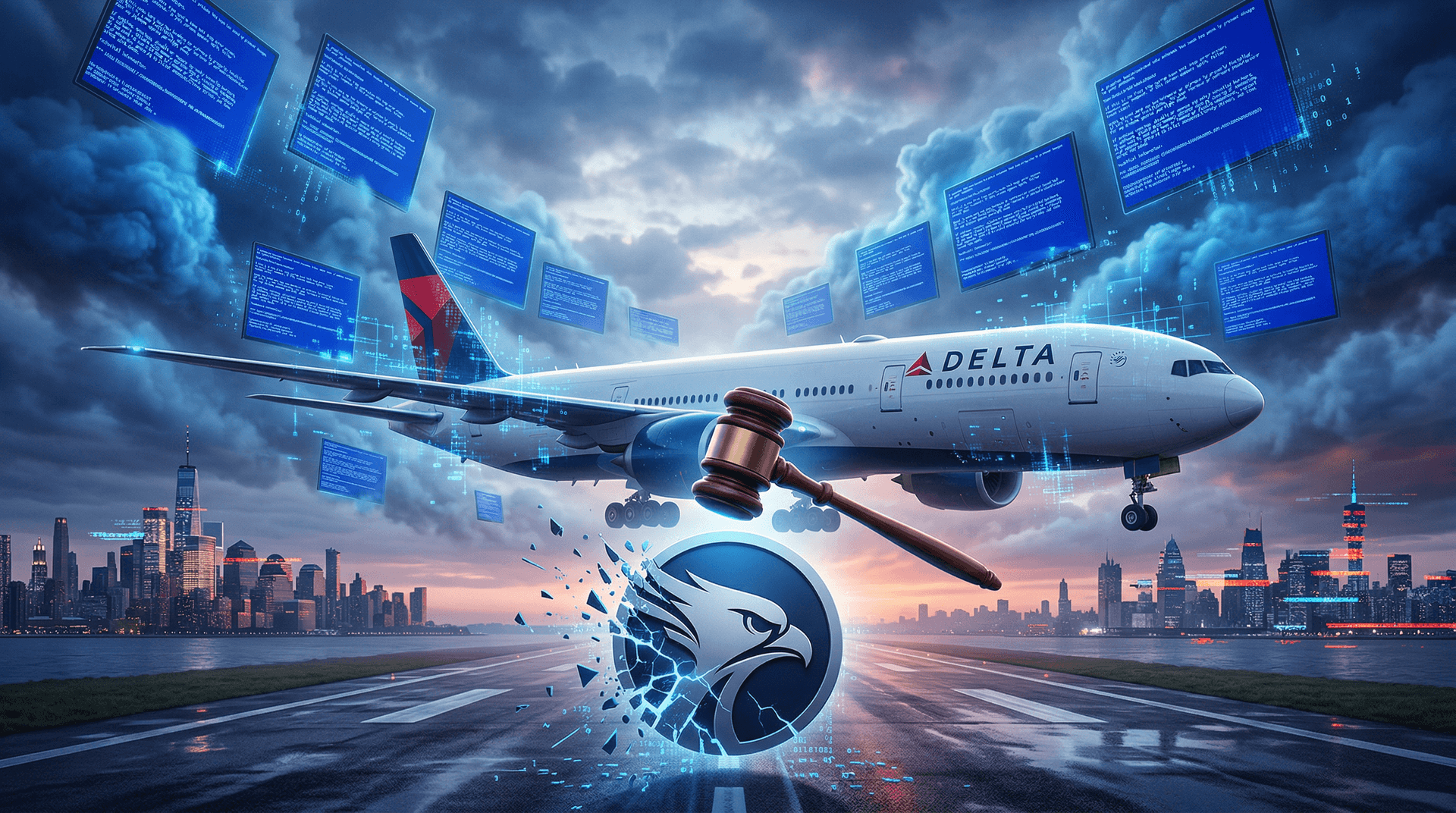
In a dramatic escalation of the fallout from one of the largest IT disruptions in history, Delta Air Lines filed a federal lawsuit against CrowdStrike on August 6, 2024. The airline accuses the cybersecurity firm of negligence and breach of contract stemming from a defective software update to its Falcon Sensor product, which paralyzed millions of Windows machines worldwide on July 19. Delta claims losses exceeding $500 million, including thousands of flight cancellations and weeks of operational chaos.
The Outage That Grounded the World
The incident began at approximately 4:45 AM ET on July 19, when CrowdStrike pushed a content update to its Falcon endpoint detection and response (EDR) platform. Intended to enhance threat detection, the update instead contained a logic error that caused Falcon to crash on Windows systems, triggering the infamous Blue Screen of Death (BSOD). Hospitals, airlines, banks, and stock exchanges ground to a halt. Microsoft estimated that 8.5 million devices were affected.
Delta was hit hardest among airlines. Over 7,000 flights were canceled in the days following, stranding passengers and forcing the carrier to issue refunds and vouchers. Recovery took nearly a week, with manual reboots required on each affected machine—a process CEO Ed Bastian described as "brutal." Bastian later revealed Delta spent over $500 million on remediation, lost revenue, and customer compensation.
CrowdStrike CEO George Kurtz quickly acknowledged the issue was not a cyberattack but a "defect in a single content update for Windows hosts." The company released remediation tools and guidance, but the damage was done. Kurtz emphasized that Mac and Linux systems were unaffected, underscoring the Windows-specific flaw in channel file validation.
Lawsuit Details: Negligence and Strict Liability
Filed in the U.S. District Court for the Northern District of Georgia, Delta's complaint paints CrowdStrike as reckless in its deployment practices. Key allegations include:
- Breach of Contract: Delta claims CrowdStrike violated service-level agreements (SLAs) by failing to test updates adequately and lacking proper rollback mechanisms.
- Negligence: The airline argues CrowdStrike skipped rigorous quality assurance, deploying the faulty update to production environments without sufficient safeguards.
- Strict Liability: Invoking product liability doctrines, Delta positions the Falcon update as a "defective product" that caused foreseeable harm.
Delta seeks compensatory damages topping $500 million, plus punitive measures. The suit demands a jury trial and injunctions to prevent future lapses. CrowdStrike has not yet responded formally but reiterated its commitment to customer support.
Broader Industry Ripples
This lawsuit is the first major legal action from the outage, but it's unlikely to be the last. Other affected entities, including hospitals and financial firms, are weighing similar moves. The incident exposed vulnerabilities in third-party software dependencies, especially in endpoint security tools running with kernel-level privileges.
Cybersecurity experts have long warned about the risks of rapid update cycles in EDR platforms. "CrowdStrike's Falcon is market-leading for a reason—it's aggressive and real-time," says Jake Williams, VP at Hunter Strategy, a cybersecurity firm. "But kernel drivers demand surgical precision. This was a wake-up call for over-reliance on single vendors."
Regulators are circling too. The U.S. Department of Transportation opened an investigation into airline impacts, while the FAA scrutinized air traffic control disruptions. Internationally, the UK's National Cyber Security Centre issued guidance on update management.
Lessons for Cybersecurity Deployments
The Delta case underscores several critical takeaways:
1. Testing Rigor: Updates must undergo canary deployments, staged rollouts, and diverse environment simulations. 2. Rollback Capabilities: Automated reversion tools could have mitigated spread. 3. Transparency: CrowdStrike's initial silence fueled distrust; proactive communication is key. 4. Vendor Diversity: Organizations should avoid single points of failure in security stacks. 5. Liability Clauses: Contracts need ironclad indemnification for update-induced outages.
Microsoft, whose Windows kernel hosted the faulty driver, faced backlash too. CEO Satya Nadella called it a "supply chain" issue, urging kernel access restrictions for security vendors—a proposal CrowdStrike resists.
CrowdStrike's Defense and Road Ahead
CrowdStrike's market cap plunged $15 billion post-outage but has partially recovered. The firm accelerated its "FixCon" tool and enhanced update validation. Kurtz maintains the error was isolated, but critics argue systemic issues in content update pipelines.
Legal analysts predict a tough fight. "Delta has a strong case on negligence," notes cybersecurity attorney Mark Rasch. "But CrowdStrike will counter with force majeure arguments and shared IT ecosystem blame."
As trials unfold, expect industry shifts: more emphasis on zero-trust updates, AI-driven anomaly detection in deployments, and standardized testing benchmarks. For airlines like Delta, rebuilding trust means investing in resilient architectures.
Implications for Startups and Investors
Cybersecurity startups watching closely. Firms like SentinelOne and Palo Alto Networks gained traction as alternatives. Investors are prioritizing update reliability in due diligence.
This saga reminds us: In cybersecurity, perfection isn't optional. One faulty byte can cost half a billion—and reshape an industry.
TH Journal will monitor developments in this landmark case.
(Word count: 912)