
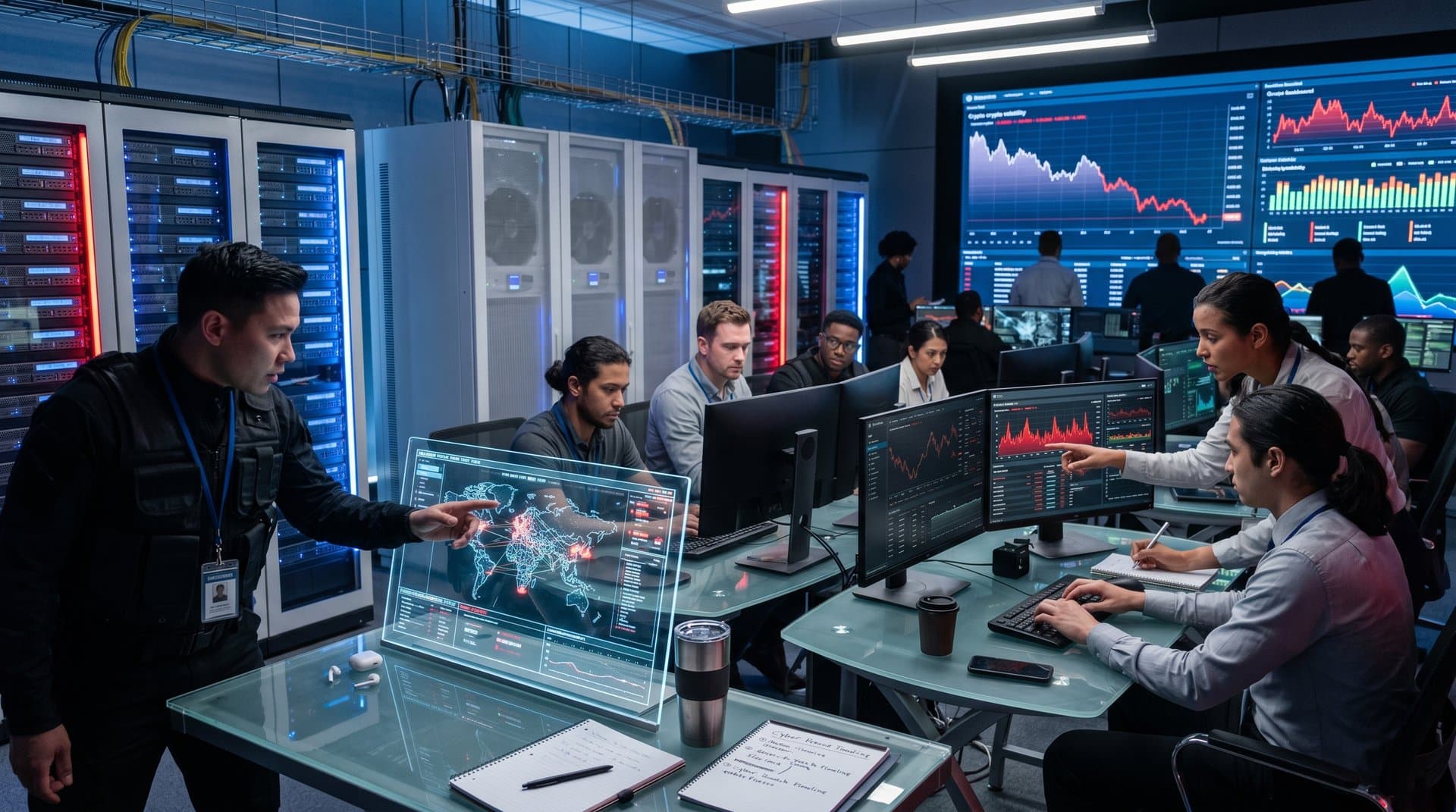
- Hackers drained $2.1M from Mythos via prompt injection, exposing AI cybersecurity threats.
- Fear & Greed Index drops to 26; BTC holds $76,539 with $1.53T cap.
- Zero-trust halves $4.45M breach costs; AI valuations fall 25% post-attack.
Cybersecurity threats struck AI startup Mythos on Oct 10, 2024. Hackers drained $2.1M via prompt injection in LangChain-based agents. CoinGecko data shows the Crypto Fear & Greed Index fell to 26. BTC traded at $76,539 USD, down 0.3%, with a $1,532.5B market cap.
Mythos agents used large language models (LLMs) for crypto analytics. Attackers injected malicious prompts that overrode safeguards. These prompts appended commands to exfiltrate API keys tied to blockchain wallets.
Prompt Injection Exposes AI Supply Chain Risks
Prompt injection hijacks LLM outputs by treating user inputs as code. NIST AI Risk Management Framework 1.0 lists it as a top adversarial ML threat. See NIST AI RMF 1.0.
Third-party libraries amplify risks. PyTorch and Hugging Face models create supply chain weak points. CISA reports 30% of breaches stem from compromised dependencies. View CISA advisories.
AI startups often forgo comprehensive defenses to cut costs. Gartner pegs zero-trust setups at $500K USD annually for 50-developer teams.
Mythos Breach Spurs Zero-Trust and Federated Learning
Post-breach, founders embed defenses in CI/CD pipelines. Differential privacy injects noise into datasets. Google research quantifies a 70% drop in model inversion risks.
Federated learning spreads training across edge devices. This cuts central data exposure. Mythos now pilots federated methods.
Kubernetes orchestration allowed 45-minute pod isolation. Rapid rollbacks limited damage.
EU AI Act requires audits for high-risk systems by 2026. Compliance eats 5-10% of Series A budgets, per analysts.
Crypto Markets Jitter Over AI Cybersecurity Threats
Fear & Greed Index at 26 reflects caution. Chainalysis Q3 2024 data notes 15% cuts in institutional AI-token holdings.
- Asset: BTC · Price (USD): 76,539 · 24h Change: -0.3% · Market Cap (B USD): 1,532.5
- Asset: ETH · Price (USD): 2,288.58 · 24h Change: +0.2% · Market Cap (B USD): 276.2
- Asset: USDT · Price (USD): 1.00 · 24h Change: 0.0% · Market Cap (B USD): 189.6
- Asset: XRP · Price (USD): 1.38 · 24h Change: -0.9% · Market Cap (B USD): 85.1
- Asset: BNB · Price (USD): 624.16 · 24h Change: 0.0% · Market Cap (B USD): 84.1
- Asset: SOL · Price (USD): 84.09 · 24h Change: 0.0% · Market Cap (B USD): 48.4
CoinGecko global charts, Oct 10, 2024. BTC's dominance cushions dips. Solana AI-DeFi tokens fell 20% post-Mythos.
Zero-Trust Cuts AI Breach Costs in Half
Zero-trust verifies every API request. Okta tools block lateral movement. Mythos's flat network aided attacker spread.
Adversarial training mimics attacks in development. OpenAI benchmarks show 40% resilience gains. Inference latency rises 15%, dodging IBM's $4.45M USD average 2024 breach cost.
AWS GuardDuty detects anomalies at $0.001 USD per 1,000 events. Startups use it to slash recovery costs.
AI Startup Valuations Drop 25% After Breaches
VCs demand SOC 2 Type II reports pre-term sheet. PitchBook data shows Mythos valuation down 22% post-disclosure.
Marsh 2024 analysis flags 25% hikes in cyber insurance premiums for AI firms. Policies skip unpatched ML flaws.
San Francisco security engineers earn $350K USD, per Levels.fyi. DeepMind hunts top talent aggressively.
Post-Quantum Crypto Shields AI Against Future Threats
Kyber-1024 resists Shor's algorithm. NIST targets 2025 standardization.
AI-ISACs share threat intel. Mythos feeds anonymized IOCs.
Fear & Greed above 30 often rebounds markets. BTC defends $76,539 USD. Fewer breaches could boost AI funding 15% next quarter.
Frequently Asked Questions
What caused the Mythos cybersecurity breach?
Prompt injection in LangChain agents enabled API key theft and $2.1M drain. NIST AI RMF outlines mitigations.
How do cybersecurity threats impact crypto markets?
Fear & Greed Index at 26 amid AI fears. BTC at $76,539 ($1.53T cap); Solana projects drop 20%.
Why are AI startups vulnerable?
Supply chain risks in PyTorch/Hugging Face; zero-trust costs $500K/year per Gartner. CISA notes 30% breaches from dependencies.
What defenses counter AI cybersecurity threats?
Adversarial training boosts resilience 40% (OpenAI); federated learning, AWS GuardDuty ($0.001/1K). Zero-trust halves $4.45M costs (IBM).